In brief
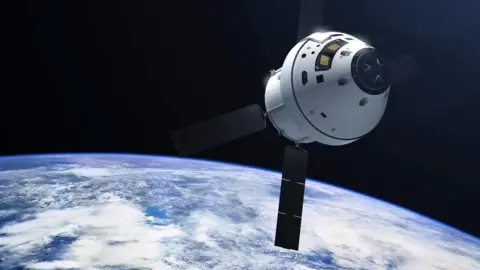
In a groundbreaking moment for space exploration, the four astronauts of NASA's Artemis II mission have successfully exited Earth's orbit, propelled by the Orion spacecraft's main engine. This mission aims to circle the Moon, allowing humanity to venture further into space than ever before. The crew, including Canada’s Jeremy Hansen, expressed excitement and determination as they embark on this significant journey more than 4,700 miles beyond the Moon, with NASA ensuring safety measures are in place for any emergencies.
As the Artemis II mission gathers pace, the four astronauts aboard the Orion spacecraft have just completed a milestone maneuver, leaving Earth's orbit and embarking on their journey towards the Moon. The astronauts successfully executed a five-minute and fifty-five seconds engine burn, known as the translunar injection (TLI), which was described as 'flawless' by NASA's Dr. Lori Glaze.Through a livestream from the Orion capsule, Canadian astronaut Jeremy Hansen shared that the crew was feeling optimistic and invigorated, emphasizing their awareness of the support from everyone involved in the mission.Artemis II is designed to take the crew on a looping path around the far side of the Moon, marking the first time humans have traveled beyond Earth's atmosphere since 1972. As the crew observes the Earth shrink behind them, they are on a path to travel more than 4,700 miles beyond the Moon, potentially surpassing the record set by the Apollo 13 mission in 1970.NASA has prepared extensively, with simulations conducted to ensure safety in case of emergency scenarios. In the event of a problem, the spacecraft can make a U-turn in space, allowing a return to Earth in the crucial first 36 hours post-TLI. After this period, the team has planned contingencies for continued travel around the Moon.The mission offers not only the promise of remarkable exploration but also the chance for the crew to witness extraordinary celestial events, including a total solar eclipse on day six of their flight, with the Moon directly obscuring the Sun.