In brief
Professor Marta Yebra directs a cutting‑edge team that marries satellite imagery, drones and AI with Indigenous fire knowledge to predict and manage bushfires. The partnership with veteran firefighter Adrian Webster interprets satellite data through centuries‑old land‑reading techniques, creating a richer picture of fire risk. The approach also supplies strategic tools such as prescribed burns, backburning and the use of drones for rapid assessment and equipment delivery. As a super El Niño looms, Australia prepares for a brutal season while offering emergency aid to countries like Spain, France and Canada. The project highlights a promising model of scientific and cultural collaboration for tackling climate‑driven fire threats worldwide.
Following the devastating Black Summer of 2019‑20, Canberra’s Professor Marta Yebra founded the Bushfire Research Centre of Excellence to develop advanced fire‑detection techniques. The centre now uses satellite data, drones and AI to map fuel moisture and predict where wildfires may ignite.
Yebra’s team discovered that satellite images work best when combined with deep Indigenous land knowledge. Adrian Webster, a veteran firefighter raised in New South Wales, uses plant colour, scent and other ecological cues to interpret satellite signals and locate high‑risk fuel pockets.
The partnership uncovers a “remarkable agreement” between space‑based data and on‑the‑ground experience, proving that Indigenous expertise and modern science can complement one another.
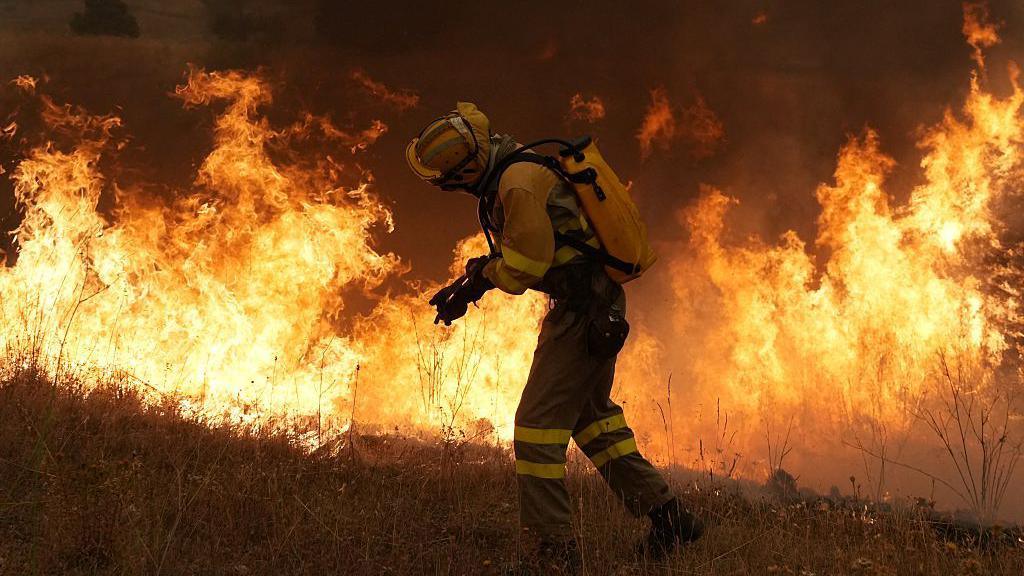
The centre’s work extends beyond Australia. Yebra and colleagues point out that Spain’s current wildfires are exacerbated by a lack of cultural burning, a practice long used by Indigenous Australians to keep fuel loads low. By learning from Australia’s heritage practice of “cool fires,” Spain may improve its risk mitigation.
Other Australian practices highlighted include backburning and prescribed burns. These controlled fires strip vegetation ahead of an approaching blaze and are increasingly used in Australia’s urban fringes where homes now sit next to bushland. Australian fire crews often deploy drones to survey fire fronts and deliver heavy equipment, sometimes before a helicopter can arrive.
Foreign firefighters, such as Damian Hatfield from Queensland, report that backburning is becoming standard in Canada’s wildfires, and that drones are integral to modern operations.
As a super El Niño looms this summer, the Bushfire Research Centre anticipates a harsh fire season. Victoria’s chief fire officer Jason Heffernan warns that local seasons will start earlier and last longer. Australia’s network of international partnerships means that fire strength “must be tackled globally.” France recently requested Australian help for its own record‑breaking wildfires, while Australia routinely sends specialists to the US and Canada. The emerging global network seeks timely cooperation to manage fire events that are increasingly affecting areas that have never seen bushfires before.