In brief
The Bald Range wildfire ignited on Friday in British Columbia’s Okanagan region, rapidly expanding to 53 square miles. Evacuations have displaced more than 12,000 residents, and an 80‑year‑old was reported dead during the chaos. Local residents like Earl Kurz and 18‑year‑old Keegan Radomski describe the dire fight to escape homes and uncertainty over whether their properties survived. Climate‑induced drought has intensified fire activity in Canada, the United States and Europe, contributing to the country’s worst wildfire season in 2023. Premier David Eby declared a state of emergency amid urgent calls for residents to heed evacuation orders and the undeniable link between extreme weather and wildfire severity.
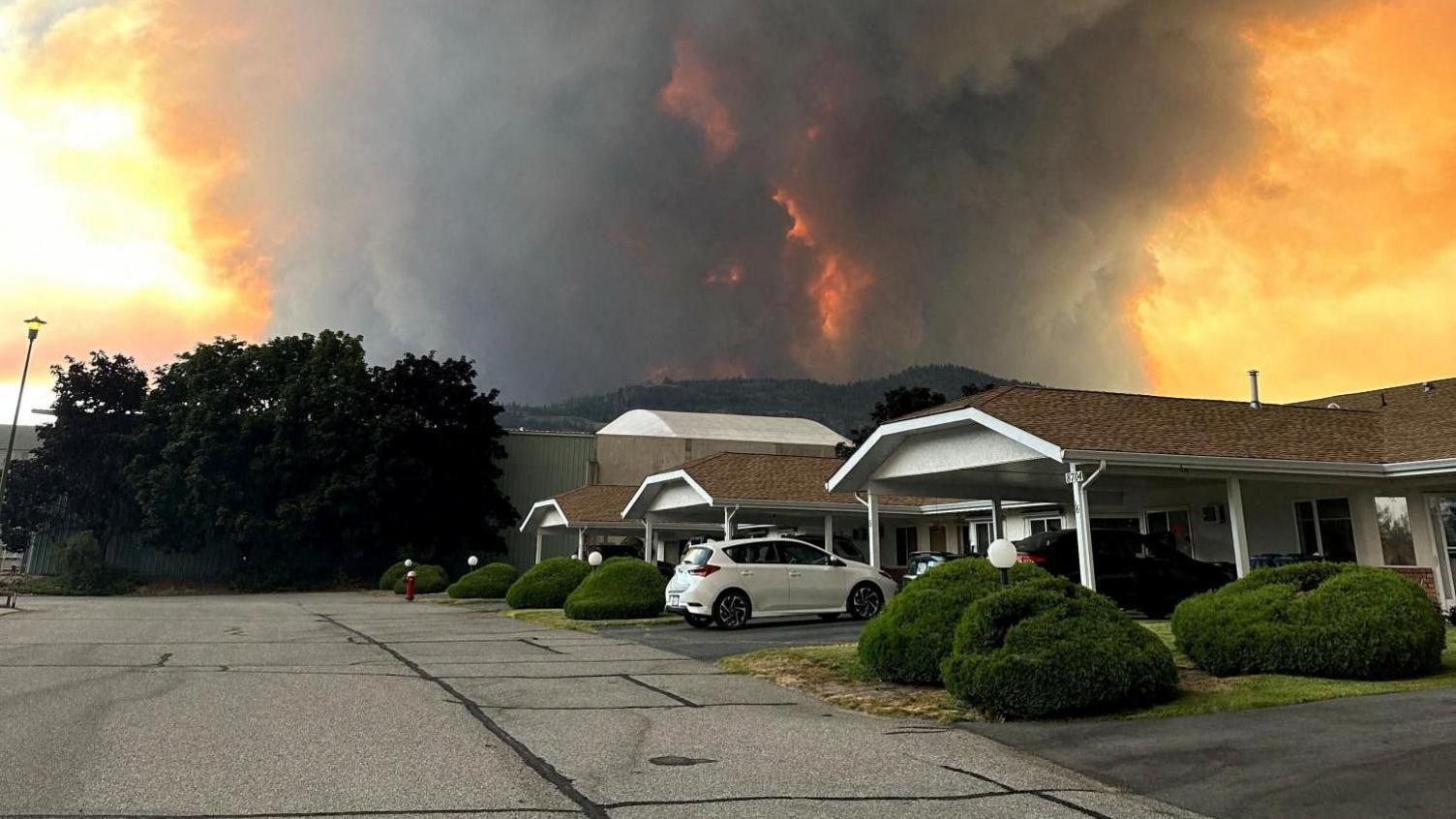
Summing the blaze: The Bald Range wildfire, that erupted Friday in British Columbia’s Okanagan region, has already scorched 53 square miles (136 sq km), a figure that rivals the state‑wide devastation seen in Canada’s worst 2023 season.
Evacuation fallout: More than 12,000 residents are under evacuation orders, and an 80‑year‑old woman tragically died while escaping, according to police. Residents such as Earl Kurz of Peachland and Keegan Radomski of Summerland, a town just south of Peachland, have spoken to the BBC about the sudden speed of the fire and the uncertainty that looms over whether any of their homes survived.
Stories on the ground: Earl Kurz, who has lived in Peachland for three decades, characterized the scene as "total incinerated destruction," seeing ash only 12 inches thick over former building sites. Meanwhile, at a two‑storey home built by her grandmother in 1996, Radomski told reporters she barely escaped with her mother’s ashes, eyes widening at how quickly the fire cracked a hill on her property.
A broader pattern: The Bald Range blaze follows Bradley Creek, believed to have destroyed more than 200 homes, and is part of a cluster of over 100 fires that have erupted across British Columbia in the past week. Drought conditions, recorded by the Okanagan Basin Water Board as the lowest lake level since 1992, have played a critical role in raising fire risk.
Climate change in context: While Canada’s boreal forests naturally experience wildfires, scientists credit recent climate spike — hotter, drier air — with spiking severity and frequency. Similar patterns are being observed in Washington state, where >65,000 people are displaced, and across Europe, where Spain and France report record‑breaking fires of this summer. The convergence of these events underscores a global trend in fire intensity that correlates strongly with rising temperatures and shrinking moisture.
Government measures: Premier David Eby issued a state of emergency, urging residents to heed evacuation notices and warn that the fire continues to spread "incredibly quickly." Fire crews have declared the Bradley Creek fire under control after intensive efforts, though the full toll of the Bald Range scenario remains uncertain.
Balancing perspectives: The local perspective highlights community resilience: residents talk about keeping in touch, perhaps anticipating future displacement. From a policy lens, emergency teams grapple with resource allocation, while scientists call for stronger climate mitigation. Economic analysts point out the toll on tourism and local vineyards, while environmental groups argue the fires are a symptom of a broader climate crisis demanding greater green infrastructure and fire‑management plans.
Looking ahead: The Okanagan’s forests and its residents face a new normal where annual evacuation orders become routine. Expanding the conversation beyond Canadian borders, the current wildfire season invites comparative study of global landscapes where drought, heat, and human infrastructure intersect to produce unprecedented destructive fire regimes.