In brief
Leaders of the Cockroach Janta Party were arrested after breaching police barricades at Jantar Mantar, a famed protest venue in Delhi. Their protest, demanding the resignation of Chief Election Commissioner Gyanesh Kumar over a contested voter list revision, has drawn sharp constitutional and political debate. Delhi police have intensified security across the capital, tightening restrictions on public assemblies and detaining thousands including journalists. While the government asserts the revisions are legitimate and the detentions are lawful, opposition parties and civil society insist the changes marginalise voters and erode democratic norms. The incident underscores growing youth mobilisation and strains between the ruling party and its critics amidst an already volatile electoral climate.
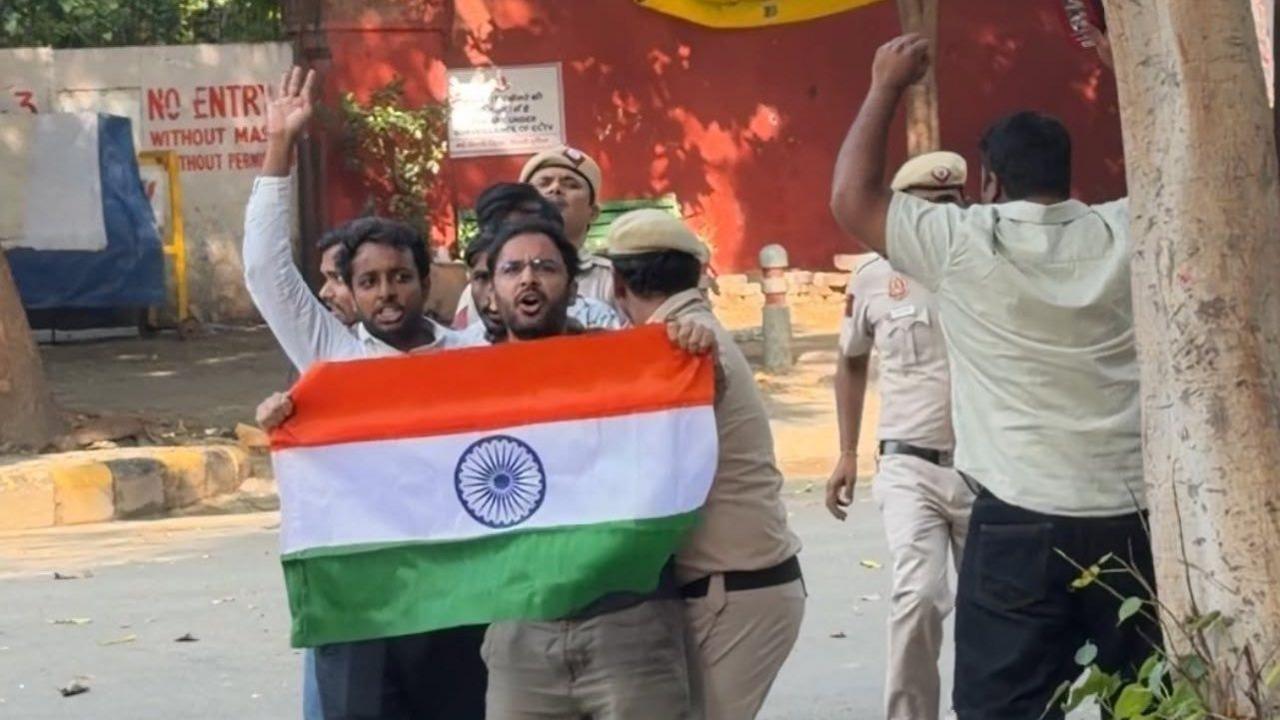
Early on Tuesday, leaders of the Cockroach Janta Party (CJP) were hauled into police custody after breaching barricades and entering the historic Jantar Mantar protest site in New Delhi. The party, founded by satirist‑turned‑activist Abhijeet Dipke, has been vocal in calling for the resignation of Chief Election Commissioner Gyanesh Kumar over a controversial revision of the national voter registry.
Dipke and two other CJP figures, Ashutosh Ranka and Saurav Das, posted video footage of themselves scaling police barricades and chanting slogans while holding the Indian flag. The footage, shared on the social‑media platform X, was followed by police arriving to remove the leaders from the site. Ranka later appeared on an Instagram Live broadcast from a police bus, expressing confidence that the protest movement would continue undeterred.
The detentions come on the wake of a federal decision announced by the Home Ministry that Jantar Mantar would no longer be a designated protest venue. Delhi Police therefore redirected protests to one of three alternate locations, a move that critics argue limits democratic expression. In the days leading up to the arrests, the CJP had met police officers to seek permission to hold a peaceful demonstration at Jantar Mantar and warned of additional protests should the request be denied. The outcome—denominating the venues and the subsequent detentions—has intensified calls for the CJP and broader opposition groups to secure a judicial review of the electoral roll changes.
The revision of the voter list, which has removed tens of millions of names from the electoral register, has sparked criticisms that it may disenfranchise eligible voters and favour the ruling party. Critics point to independent reports suggesting a lack of transparency in the process and the dismissal by the Election Commission of concerns raised by its own officials. The CJP’s protest, alongside a contemporaneous march by India’s main opposition Congress party from Connaught Place to the Supreme Court, underscores a broader movement for electoral accountability and transparency.
In the wider context, the CJP’s rise from an online satire movement—sparked by a judge’s remarks likening struggling young people to cockroaches—to a pressure group illustrates a new wave of youth activism. Their earlier student‑led demonstrations over exam irregularities and calls for education reform highlight underlying frustrations regarding unemployment, educational integrity, and governance. Some analysts see the CJP as a focal point of collective civil‑society frustration, while others argue that the group’s methods risk polarising an already divided electorate.
While police describe the arrests as a law‑enforcement exercise aimed at maintaining public order, opposition politicians and civic organisations contend that such actions suppress dissent and infringe on democratic rights. The ongoing tensions illustrate the delicate balance between security, civil liberties and electoral integrity in India’s largest democracy.