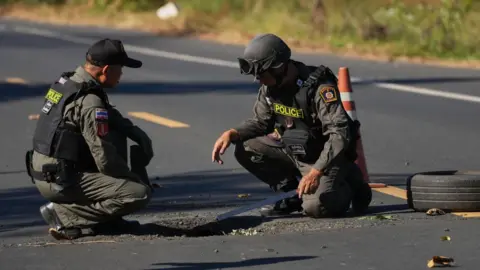
In a crucial development for regional stability, the defense ministers of Thailand and Cambodia announced a ceasefire agreement on Saturday. This decision comes in response to weeks of deadly border clashes, which have resulted in at least 41 fatalities and displaced nearly one million civilians.
The ceasefire, effective immediately at noon local time, includes an agreement to freeze all troop movements and facilitate the return of civilians to their homes in the border areas.
This breakthrough follows several days of negotiations between Thai and Cambodian officials, arising from escalating tensions that have seen recent hostilities end in significant violence.
The joint statement detailing the ceasefire provisions stresses the necessity of halting attacks on civilians, civilian infrastructure, and military objectives from both sides. It also emphasizes the importance of avoiding provocations, such as unprovoked firing and troop movements towards opposing positions.
As part of the agreement, once the ceasefire has held for 72 hours, 18 Cambodian soldiers captured by Thailand will also be released.
The ceasefire marks a pivot from a prior truce that collapsed earlier in December, resulting in renewed fighting. Responsibilities for the breakdown of that agreement were highly contested, with each side blaming the other for initiating hostilities.
Notably, Thailand's military stated their troops acted in response to fire from Cambodian soldiers, while Cambodia claimed their forces did not retaliate. The escalation saw Thai airstrikes on claimed military positions within Cambodia, while Cambodia described these airstrikes as indiscriminate and harmful to civilian structures.
The historical context of border disputes between Thailand and Cambodia stretches over a century but has intensified recently due to incidents such as the death of a Cambodian soldier this past May.
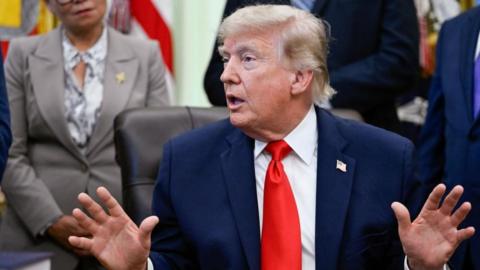
Following a peace agreement, mediated with assistance from Malaysia and high-profile figures like former President Donald Trump, both nations in October had initially committed to a fragile ceasefire deemed the Kuala Lumpur Peace Accords. However, this was jeopardized after Thailand declared a raised security threat.
As tensions remain palpable, the current ceasefire opens a window for further discussions, with hopes for a long-lasting resolution to the conflict.