In brief
Donald Trump's history with the NFL is marked by conflict and controversy, from his efforts to buy a team in the 1980s to his vocal criticism of player protests during games. As Trump now claims influence over the league's future decisions, tensions remain high, especially regarding political statements made by players and musical performances at events like the Super Bowl. This article explores the multifaceted dynamics between Trump and the NFL, reflecting on how personal ambitions and political agendas have shaped their interactions.
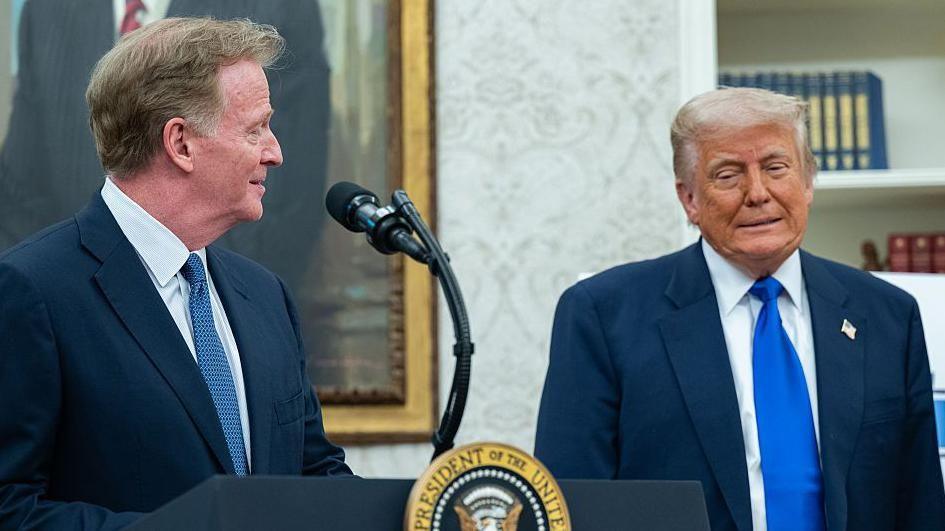
American football fans never thought they would see the day - the head of the National Football League standing shoulder to shoulder with Donald Trump in the Oval Office.
Trump has frequently traded blows with the NFL since he first became US president in 2017, but he and America's most popular sports league have been sparring partners for more than 40 years.
Trump's 'feud' with the NFL has involved him testifying against the league and failing, on multiple occasions, to buy a team. It may even have propelled him to the presidency.
When NFL commissioner Roger Goodell joined Trump in May to announce the NFL Draft would be coming to Washington DC for the first time, it seemed Trump had finally made friends with arguably his oldest foe.
Well, maybe not. With this season set to conclude with Super Bowl 60 on Sunday, BBC Sport examines Trump's long and complicated relationship with the NFL and why it could be set for another twist.
Lawsuit fails to force league merger
Already a real-estate magnate by that point, Trump viewed owning an American football team as a means of building his brand. After attempting to acquire an NFL franchise, a 37-year-old Trump bought the New Jersey Generals in September 1983.
They were founding members of the USFL, which started in the spring of 1983 so did not clash with the NFL. The new league managed to lure top players from the NFL and the college game.
The Generals improved during their two seasons under Trump but lost in the first round of the play-offs in both 1984 and 1985.
However, Trump had made his intentions clear from the outset. He didn't want the USFL to remain a spring league; he wanted to go directly against the NFL in autumn-winter.
That was not the USFL's original plan but, in August 1984, Trump convinced team owners to vote on switching to an autumn-winter schedule from 1986.
Then, two months later the USFL filed an anti-trust lawsuit against the NFL - led by Trump. The case went to trial in May 1986, with the USFL arguing the NFL had conspired to monopolise TV contracts, seeking damages worth $1.7bn (£1.25bn).
Trump hoped it would force a league merger and earn him an NFL franchise. He also envisaged a Trump-branded stadium in Manhattan.
However, a jury found the NFL was an 'illegal monopoly' but rejected the other charges and the USFL was awarded just $3, with the jury feeling most of the USFL's problems were self-inflicted.
The league had built up huge debt, and shortly after the verdict, it folded.
Trump's image took a hit during the process; jurors later claimed he came off as arrogant and unlikeable.
Trump and NFL commissioner Pete Rozelle provided contrasting accounts of a meeting they had in March 1984, during which Rozelle allegedly told Trump, 'as long as I or any of my heirs are involved in the NFL, you will never be a franchise owner in the league.'
Did failed Bills bid lead to presidential run?
Trump had already attempted to buy the Baltimore Colts, before the NFL franchise relocated to Indianapolis in 1984. He then turned down the chance to buy the Dallas Cowboys for $50m in 1984 and bought the Generals instead for $9m.
After the USFL's demise, Trump pulled out of discussions in 1988 to buy the New England Patriots, but he focused on other enterprises, becoming a reality TV star on The Apprentice, until the Buffalo Bills were put up for sale in 2014.
Trump claims he bid $1bn in cash, but Terry Pegula, who owned the NHL's Buffalo Sabres, ultimately bought the Bills for $1.4bn.
Trump's bid was mentioned during a fraud trial that ruled against him in 2024, highlighting how he had inflated his wealth to secure loans, revealing discrepancies in his financial statements.
If Trump felt blindsided by the Bills sale, ESPN analyst Stephen A. Smith claimed that before Pegula's takeover was approved by NFL team owners, Trump warned, 'If they screw me over, I’m going to show them. I’m going to get them all back. I’m going to run for president.'
Trump and the anthem debate
It was during Trump's first presidential run that NFL quarterback Colin Kaepernick began taking a knee to protest racial injustice and police brutality in the US.
Many NFL players followed suit and Trump was a vocal critic, calling for fans to boycott games and team owners to fire players who didn’t stand for the anthem. This led to friction with the league, as players and coaches sought to apply their voices to significant societal issues.
Goodell stated that Trump's divisive comments demonstrated a lack of respect for the NFL, while Patriots owner Kraft deemed Trump's remarks inflammatory.
Trump has since maintained he would like to see Kaepernick return to the NFL but the discourse surrounding the anthem issue remains complicated and contentious as players continue to navigate their rights and protest actions today.
Could Trump create more NFL history?
After becoming the first sitting president to attend a Super Bowl, Trump sought a turnaround with the NFL as he announced the US capital would host the 2027 draft in collaboration with the Washington Commanders.
However, tensions persist—especially after he criticized the selection of performers for the Super Bowl halftime show, expressing disapproval over artists who have been critical of him.
As Trump continues to navigate his relationship with the NFL, it appears he will leverage his influence and ambitions, potentially shaping the league's future in his favor.