In brief
The article charts the persistent age imbalance in the U.S. Congress, spotlighting veteran representatives such as Hal Rogers alongside high‑profile senior politicians like President Joe Biden and Senator Chuck Grassley. It examines the case of Gen‑Z contender Riley Owen in Utah, noting fundraising gaps and entrenched incumbency advantages. Analysts and scholars highlight how a two‑party system, limited youth turnout, and the perception of political legitimacy contribute to the phenomenon. The piece also discusses gender, family, and parental leave issues and urges voters to separate age from competency. Overall, it calls for broader reforms to diversify representation while balancing experience with fresh perspectives.
The United States Congress ached for fresh faces, yet a week ago, the only Gen‑Z candidate in the 2026 mid‑term race was 27‑year‑old Republican Riley Owen. Running in Utah’s newly birthed 1st district, he said the rigours of Washington were thin compared to the urgency of early‑career careers, especially for young parents.
Owen’s campaign was outmatched financially. By mid‑October, his rival, 51‑year‑old Democrat Ben McAdams, had raised over $2.6 million, while Owen had gathered only $150,000 – a stark illustration of the power of incumbency and the two‑party cadence. He cautioned against “us versus them” politics, stressing that Washington wasn’t doing the job for any age group.
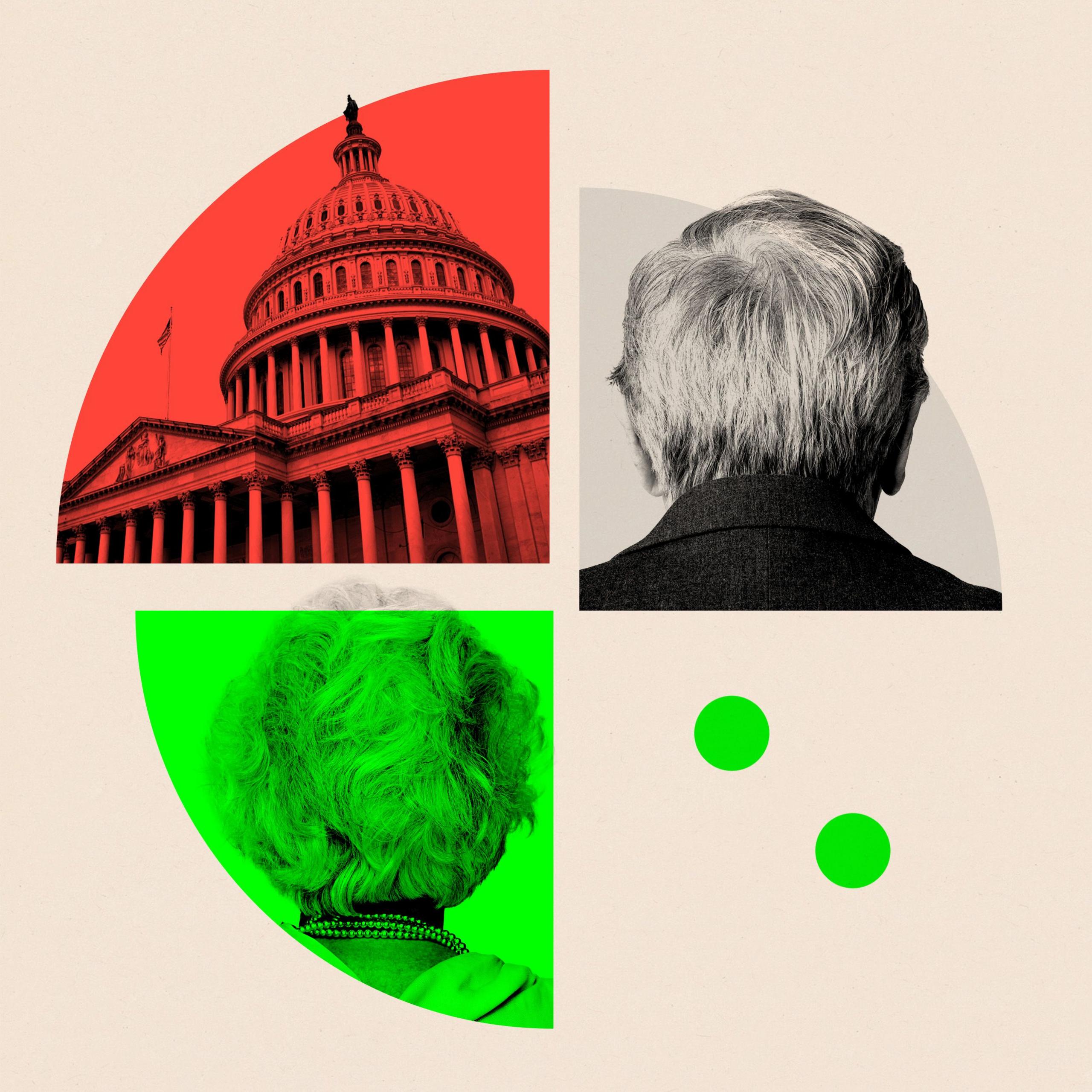
The story’s narrative is framed by the fact that 88‑year‑old Republican Representative Hal Rogers is looking for a 24th term. Since 1981, Rogers has been the longest‑serving House member, and his candidacy underscores the US’s gerontocracy, a system dominated by older politicians. Other long‑tenured seniors include President Donald Trump (80) and former President Joe Biden (82), who left office at 82; outlier Senator Chuck Grassley, 93; and senior Democrat Maxine Waters, 88.
The median age of Congress members has climbed: both House and Senate beds recorded their lowest medians in the early 1980s (48 and 52), and current numbers read 58 for the House and 65 for the Senate against a U.S. median age of 39. The problem is compounded by the knowledge that a 30‑year‑old can say “no” to voting and an 82‑year‑old can still juggle an entire legislative agenda.
Pew Research findings offer one explanation – younger voters are less engaged. In 2024, those aged 18‑34 made up 20% of the voting‑eligible population but accounted for only 15% of votes cast. Younger voters feel estranged from the political elite, a sentiment that feeds partisan apathy.
The President’s “Let’s Make America Great Again” slogan – first used by Ronald Reagan and revived by Donald Trump – set early for a politicized portrait of age. Now, as rising young figures like Zohran Mamdani (34) win offices like the mayoralty of New York City, the narrative is shifting: youth success hinges on new ideas, not just youthful age.
Another factor is motherhood’s grating reality. With no federal paid parental leave, many women in Washington – from Alexandria Ocasio‑Cortez (37) to Karoline Leavitt (29) – face a career‑family tension that often forces them out of demand. Only a handful of lawmakers have given birth while holding office.
Studies still suggest that age is not a direct predictor of policy quality. Gerontologist Tracey Gendron notes that an 85‑year‑old can be as effective as a 45‑year‑old, challenging automatic age‑biases.
In the end, the article calls for preventing a “gerontocracy” without discarding the wealth of experience older politicians bring. It emphasises the need for more youth‑oriented candidate pathways, broader civic engagement platforms, and reforms to ensure representation mirrors a multigenerational society, not just one of the decades.