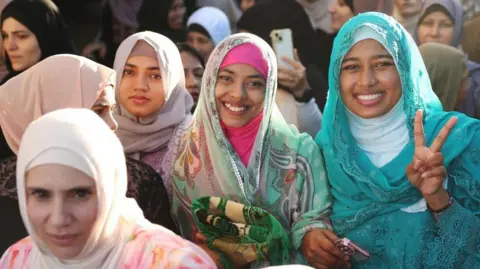
As sunset approached in the south-western Sydney suburb of Lakemba, the street outside the Imam Ali bin Abi Taleb Mosque was bustling with thousands gathering for a community Iftar—the evening meal marking the end of Ramadan. The tables, divided into designated sections for women and men, were quickly filled as families broke their fast with dates and other dishes, exemplifying the spirit of community. However, the atmosphere was marred by a police surveillance trailer stationed nearby, highlighting fears amid a surge in Islamophobic incidents. In a statement, Gamel Kheir, secretary of the Lebanese Muslim Association, noted that the community is facing challenging times, emphasizing the importance of unity during such critical moments.
The atmosphere of celebration contrasts sharply with the rise in hate incidents reported in Australia, particularly since the escalation of conflicts abroad. Statistics show that an average of 18 Islamophobic incidents have been reported weekly—an increase from just 2.5 such incidents prior to the October 7 attacks that ignited tensions globally.
Attendees expressed a mixture of joy and underlying anxiety as they navigated a landscape where safety concerns weigh heavily. It's against this backdrop of rising Islamophobia that the community’s resilience shines through. Despite the worries, the event served as a reminder of the closeness within the community and the importance of standing together against divisive forces.
As Prime Minister Anthony Albanese visited the mosque during the Eid celebrations, he was met with mixed responses from the community, further emphasizing the strain between government action and public sentiment regarding Muslim representation and safety.
The cultural heart of Sydney, known for its diversity stemming from waves of immigration, now finds itself challenged by the tensions of contemporary societal issues. Community leaders point out that while they celebrate their culture through events like Eid, they also face the stark reality of increasing division within the broader sociopolitical landscape of Australia.
In Lakemba, feelings of frustration and concern linger, but the shared meals during Iftar symbolize a hopeful defiance against rising Islamophobia, striving for better understanding amid Australia’s evolving identity.
The atmosphere of celebration contrasts sharply with the rise in hate incidents reported in Australia, particularly since the escalation of conflicts abroad. Statistics show that an average of 18 Islamophobic incidents have been reported weekly—an increase from just 2.5 such incidents prior to the October 7 attacks that ignited tensions globally.
Attendees expressed a mixture of joy and underlying anxiety as they navigated a landscape where safety concerns weigh heavily. It's against this backdrop of rising Islamophobia that the community’s resilience shines through. Despite the worries, the event served as a reminder of the closeness within the community and the importance of standing together against divisive forces.
As Prime Minister Anthony Albanese visited the mosque during the Eid celebrations, he was met with mixed responses from the community, further emphasizing the strain between government action and public sentiment regarding Muslim representation and safety.
The cultural heart of Sydney, known for its diversity stemming from waves of immigration, now finds itself challenged by the tensions of contemporary societal issues. Community leaders point out that while they celebrate their culture through events like Eid, they also face the stark reality of increasing division within the broader sociopolitical landscape of Australia.
In Lakemba, feelings of frustration and concern linger, but the shared meals during Iftar symbolize a hopeful defiance against rising Islamophobia, striving for better understanding amid Australia’s evolving identity.