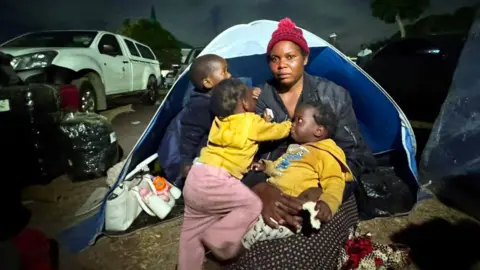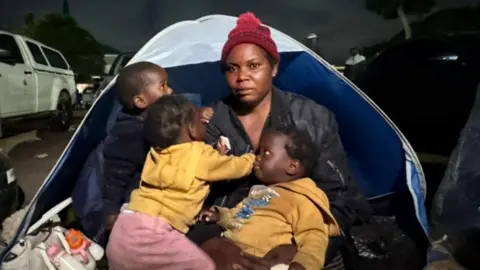
In Plateau State, Nigeria, conflicts brewing for decades continue to devastate communities, with numerous families caught in the cycle of violence. Witness accounts detail harrowing attacks on Christian villages by armed assailants believed to belong to the Fulani ethnic group, leading to escalating fears of genocide and persecution.
One such account comes from Joseph Ize Zino, a youth leader in central Nigeria, who recalls the night attackers came armed with chants of 'Allahu Akbar.' The resultant chaos led to significant loss of life, with allegations pointing towards ethnic dimensions, further complicating the narrative of conflict.
The Nigerian government refutes claims of genocide, asserting that violence affects all faiths amidst numerous sectarian clashes. Christians report targeted assaults, while Muslim communities frequently suffer from assaults by Islamist militants.
This narrative deepens with a historical backdrop of land disputes, rooted in agricultural and pastoral traditions intertwined with ethnic identities. Farmers, primarily Christian, and herders, predominantly Muslim, vie for diminishing land and water resources amidst a growing population, inflating tensions.
Despite community leaders advocating initiatives for peace and dialogue, local politicians frequently exploit ethnic divisions for political gain, exacerbating the conflict. The security apparatus remains strikingly absent in rural areas, instilling a culture of impunity and fear among residents.
Nonetheless, efforts for reconciliation surface within certain communities, illustrating a desire for coexistence. Initiatives funded by external interests showcase potential pathways to peace, as ordinary citizens engage in joint farming projects, laying the groundwork for future collaboration, rooted in unity rather than division.
Ultimately, the violent landscape of Plateau State mirrors broader challenges within Nigeria, where governmental inefficacies render communities vulnerable. Persistent dialogue and grassroots initiatives are deemed vital for an enduring resolution to conflict and the restoration of peace.