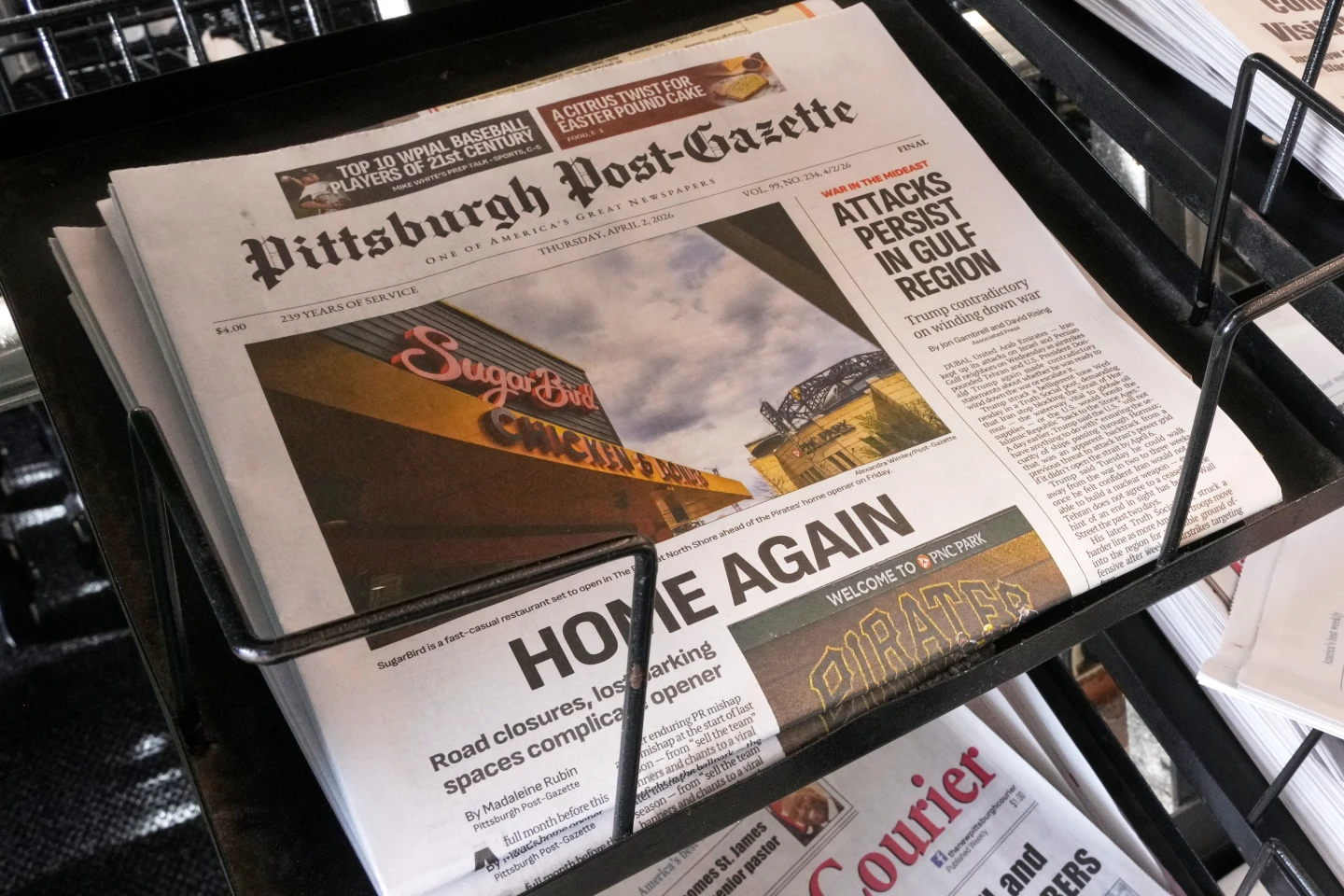
In Pittsburgh, the landscape of local journalism has shifted dramatically this spring, marked by a near-loss and subsequent revival of historic news outlets. The Pittsburgh Post-Gazette, a newspaper whose roots date back to before the U.S. Constitution, recently announced its sale to a nonprofit organization dedicated to keeping the paper operational. This decision made headlines as the paper was on the brink of closure, which would have left Pittsburgh as the largest U.S. city without a local newspaper.
Earlier this spring, the alternative Pittsburgh City Paper faced a similar crisis, announcing closure after 34 years of publication. However, it has since been rejuvenated under new management, promising to return to its original focus on local news, arts, and culture. These developments come against a backdrop of widespread uncertainty in the journalism industry, which has seen a steady decline in readership and staff over the last two decades.
Halle Stockton, co-executive director of Public Source, emphasized the natural human response to realize the importance of local news, suggesting that recent events have served as a wake-up call.
The Pittsburgh Post-Gazette, known for its significant achievements such as winning a Pulitzer Prize for its coverage of the Tree of Life synagogue shooting, has persevered despite labor conflicts and financial struggles in recent years. Its previous owner, Block Communications, faced criticism but ultimately sold the newspaper to the Venetoulis Institute for Local Journalism, which has pledged to invest in its future. This move sparked discussions about the changing tides of newspaper ownership and the necessity of innovative solutions to sustain local journalism.
Meanwhile, the revitalization of the Pittsburgh City Paper, now owned by a new nonprofit called Local Matters, brings further optimism. The paper aims to reconnect with the community and diversify its content, shifting back to monthly print editions while incorporating a membership program to foster reader support.
In light of these developments, other local news sources, like the Pittsburgh Tribune-Review, are also adapting by increasing their editorial capacity and renewing print editions in the city.
Some experts believe this acquisition and revitalization period could set a precedent for other struggling newspapers across the nation, as cities adapt to the voids left behind by closures and financial pressures. However, the future remains uncertain, particularly as younger generations gravitate towards alternative news sources, prioritizing social media platforms like Instagram and TikTok.
The evolving landscape presents both significant challenges and unique opportunities for Pittsburgh’s journalists. Efforts to collaborate and share resources may play a pivotal role in fostering a sustainable future for local news, as stakeholders navigate the complexities of modern journalism.
Earlier this spring, the alternative Pittsburgh City Paper faced a similar crisis, announcing closure after 34 years of publication. However, it has since been rejuvenated under new management, promising to return to its original focus on local news, arts, and culture. These developments come against a backdrop of widespread uncertainty in the journalism industry, which has seen a steady decline in readership and staff over the last two decades.
Halle Stockton, co-executive director of Public Source, emphasized the natural human response to realize the importance of local news, suggesting that recent events have served as a wake-up call.
The Pittsburgh Post-Gazette, known for its significant achievements such as winning a Pulitzer Prize for its coverage of the Tree of Life synagogue shooting, has persevered despite labor conflicts and financial struggles in recent years. Its previous owner, Block Communications, faced criticism but ultimately sold the newspaper to the Venetoulis Institute for Local Journalism, which has pledged to invest in its future. This move sparked discussions about the changing tides of newspaper ownership and the necessity of innovative solutions to sustain local journalism.
Meanwhile, the revitalization of the Pittsburgh City Paper, now owned by a new nonprofit called Local Matters, brings further optimism. The paper aims to reconnect with the community and diversify its content, shifting back to monthly print editions while incorporating a membership program to foster reader support.
In light of these developments, other local news sources, like the Pittsburgh Tribune-Review, are also adapting by increasing their editorial capacity and renewing print editions in the city.
Some experts believe this acquisition and revitalization period could set a precedent for other struggling newspapers across the nation, as cities adapt to the voids left behind by closures and financial pressures. However, the future remains uncertain, particularly as younger generations gravitate towards alternative news sources, prioritizing social media platforms like Instagram and TikTok.
The evolving landscape presents both significant challenges and unique opportunities for Pittsburgh’s journalists. Efforts to collaborate and share resources may play a pivotal role in fostering a sustainable future for local news, as stakeholders navigate the complexities of modern journalism.