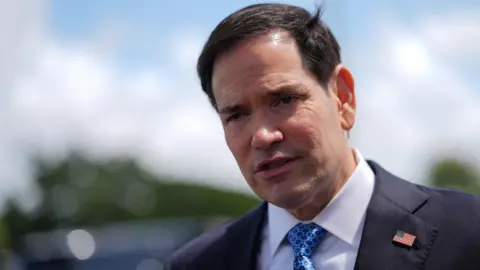
The escalating Cuba-US diplomatic crisis has ignited competing narratives about national security, humanitarian impact, and geopolitical strategy. US Secretary of State Marco Rubio asserted at a press briefing that Cuba poses a 'national security threat' to the United States, stating the 'likelihood of a peaceful agreement is not high.' This declaration follows the US indictment of former Cuban president Raúl Castro for alleged involvement in the 1996 downing of two US-made aircraft that killed four Americans.
**US Perspective**: Rubio framed Cuba as 'one of the leading sponsors of terrorism in the entire region' while acknowledging diplomacy remains the administration's preference. The Department of State cited Cuba's refusal to engage constructively on security issues as justification for heightened tensions. Secretary of State Rubio emphasized President Trump's 'right and obligation to protect his country,' while Trump himself characterized Cuba as a 'failed country' requiring 'humanitarian' assistance. The administration continues to pressure Havana through economic sanctions, with Secretary Rubio stating Cuba has accepted a $100 million humanitarian aid offer but continues to face fuel shortages and blackouts.
**Cuban Perspective**: Foreign Minister Bruno Rodríguez vehemently rejected Rubio's claims as 'lies,' asserting Cuba has 'never posed a threat to the US.' He accused the US of 'ruthlessly and systematically' attacking Cuba through economic warfare that has worsened the humanitarian crisis. Rodríguez highlighted Cuba's 2023 fuel crisis, which has led to 12-hour blackouts and food shortages, directly linking these conditions to US sanctions. Cuban officials maintain that US actions violate international law, and the indictment of Castro constitutes 'political persecution' rather than legitimate justice.
**Humanitarian Reality**: Independent analysts note that Cuba's energy crisis has created severe shortages affecting daily life, with hospitals and schools facing operational disruptions. The US blockade, tightened under Trump administration policies, has been cited by UN agencies as a key factor in this humanitarian emergency. Despite Cuba's acceptance of humanitarian aid, delivery challenges persist due to infrastructure limitations and bureaucratic hurdles.
**Global Context**: Russia and China have condemned the US indictment as a violation of international norms, with Chinese Foreign Minister Qin Gang stating it 'destabilizes the Caribbean and undermines global security.' European Union representatives expressed concern for Cuban citizens but maintained support for US sovereignty. The indictment's procedural approach—charging Castro with murder without extradition cooperation—echoes similar tactics used in Venezuela, prompting regional skepticism about US legal legitimacy.
**Historical Dimension**: The 1996 incident—the 'downing of the planes'—remains a contested historical event. While the US insists on accountability, Cuba maintains its military aircraft were defending airspace. This legal dispute has evolved into a broader Cold War-era confrontation, with US pressure tactics escalating since Trump's 2017 policy shift. Cuban officials argue the current sanctions constitute 'economic warfare' that violates basic human rights, while US supporters cite historical threats from Havana.
As the standoff intensifies, experts warn of potential spillover effects: The US may accelerate sanctions while Cuba seeks closer ties with Russia and China. The humanitarian dimension—the blackouts, food insecurity, and fuel shortages—remains the most urgent concern for Cuban citizens, regardless of diplomatic posturing. With Trump publicly stating his administration 'will be the one that' changes Cuba's status quo, the international community watches nervously as the crisis threatens to reshape Caribbean geopolitics.}
**US Perspective**: Rubio framed Cuba as 'one of the leading sponsors of terrorism in the entire region' while acknowledging diplomacy remains the administration's preference. The Department of State cited Cuba's refusal to engage constructively on security issues as justification for heightened tensions. Secretary of State Rubio emphasized President Trump's 'right and obligation to protect his country,' while Trump himself characterized Cuba as a 'failed country' requiring 'humanitarian' assistance. The administration continues to pressure Havana through economic sanctions, with Secretary Rubio stating Cuba has accepted a $100 million humanitarian aid offer but continues to face fuel shortages and blackouts.
**Cuban Perspective**: Foreign Minister Bruno Rodríguez vehemently rejected Rubio's claims as 'lies,' asserting Cuba has 'never posed a threat to the US.' He accused the US of 'ruthlessly and systematically' attacking Cuba through economic warfare that has worsened the humanitarian crisis. Rodríguez highlighted Cuba's 2023 fuel crisis, which has led to 12-hour blackouts and food shortages, directly linking these conditions to US sanctions. Cuban officials maintain that US actions violate international law, and the indictment of Castro constitutes 'political persecution' rather than legitimate justice.
**Humanitarian Reality**: Independent analysts note that Cuba's energy crisis has created severe shortages affecting daily life, with hospitals and schools facing operational disruptions. The US blockade, tightened under Trump administration policies, has been cited by UN agencies as a key factor in this humanitarian emergency. Despite Cuba's acceptance of humanitarian aid, delivery challenges persist due to infrastructure limitations and bureaucratic hurdles.
**Global Context**: Russia and China have condemned the US indictment as a violation of international norms, with Chinese Foreign Minister Qin Gang stating it 'destabilizes the Caribbean and undermines global security.' European Union representatives expressed concern for Cuban citizens but maintained support for US sovereignty. The indictment's procedural approach—charging Castro with murder without extradition cooperation—echoes similar tactics used in Venezuela, prompting regional skepticism about US legal legitimacy.
**Historical Dimension**: The 1996 incident—the 'downing of the planes'—remains a contested historical event. While the US insists on accountability, Cuba maintains its military aircraft were defending airspace. This legal dispute has evolved into a broader Cold War-era confrontation, with US pressure tactics escalating since Trump's 2017 policy shift. Cuban officials argue the current sanctions constitute 'economic warfare' that violates basic human rights, while US supporters cite historical threats from Havana.
As the standoff intensifies, experts warn of potential spillover effects: The US may accelerate sanctions while Cuba seeks closer ties with Russia and China. The humanitarian dimension—the blackouts, food insecurity, and fuel shortages—remains the most urgent concern for Cuban citizens, regardless of diplomatic posturing. With Trump publicly stating his administration 'will be the one that' changes Cuba's status quo, the international community watches nervously as the crisis threatens to reshape Caribbean geopolitics.}