In brief
In Delhi, police detained the founder of the Cockroach Janta Party (CJP) just before a planned march protesting alleged voter‑roll manipulation. The police response involved thousands of officers and the closure of central public spaces, while CJP leaders and opposition parties criticised the move as a suppression of dissent. Authorities say the crackdown was needed to prevent disorder, but human‑rights observers warn of excessive force and potential abuse of power. The incident reflects ongoing tensions between civic activism and state control over public assembly in India.
Background: The Cockroach Janta Party and Its Demands
The Cockroach Janta Party (CJP) emerged in May 2026 as an online campaign that gained traction among unemployed youth after the Chief Justice compared the generation to cockroaches. Within several months the movement organized mass protests over leaked exam papers and later over what it calls the ‘Special Intensive Revision’ (SIR), a sweeping voter‑roll exercise that purports to remove 130 million names. CJP demands that Chief Election Commissioner Gyanesh Kumar resign, accusing the commission of favouring the ruling Bharatiya Janata Party. The Election Commission, in turn, denies any bias, describing the SIR as a necessary audit to preserve electoral integrity.
Police Response and Detentions
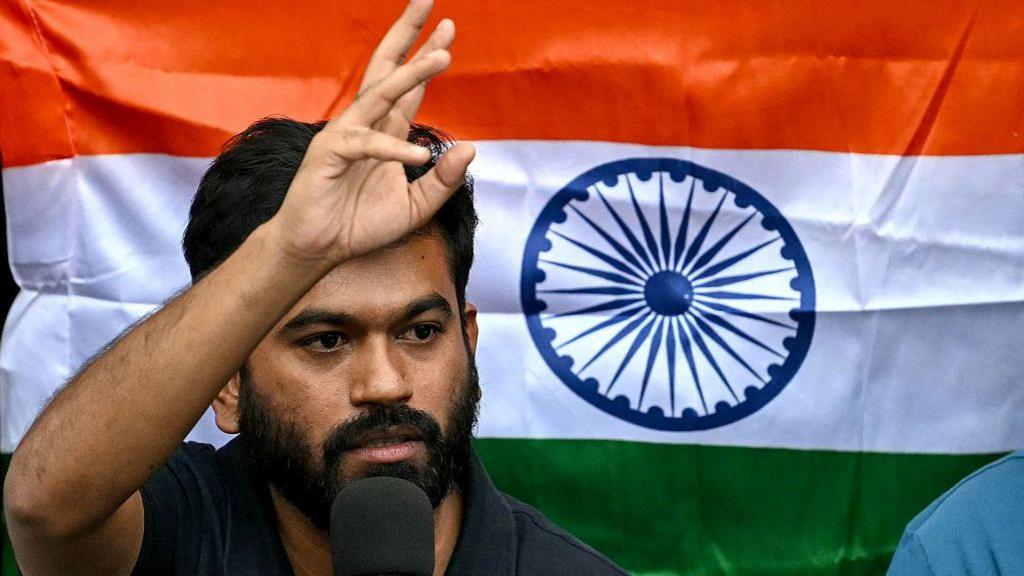
Ahead of a planned Friday march to a park in Connaught Place, the Delhi police deployed thousands of officers, closed Central Park for two days citing "administrative reasons," and surrounded the CJP founder, Abhijeet Dipke, outside his home. Dipke was forced into a police vehicle, a move mirrored a week earlier when his plane was boarded upon arrival in Delhi. Two other CJP leaders, Saurav Das and Ashutosh Ranka, were arrested after entering Jantar Mantar, a site that has historically hosted political rallies. The police claim the operation was preventive, aimed at avoiding traffic disruption, property damage and potential violence, citing earlier incidents where large gatherings triggered clashes with security forces. Human‑rights observers, however, highlight the severity of the crackdown, noting that dozens of journalists and students were detained, some forcibly relocated into buses, and that footage shows police physically assaulting protestors.
Opposition and Civil‑Society Perspectives
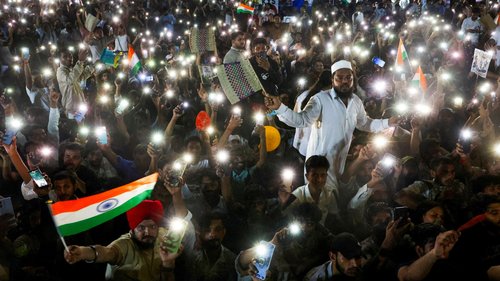
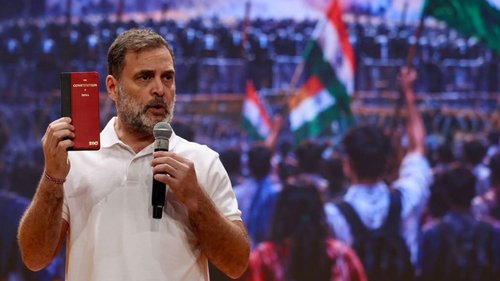
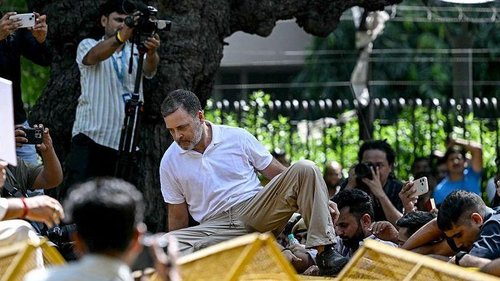
Opposition leaders such as Rahul Gandhi are converging with the CJP in their grievances over the SIR. Gandhi and fellow lawmakers attempted a march to the Election Commission’s headquarters but were stopped and detained by police. Their protests, along with those of the CJP, press for the reopening of Jantar Mantar as a democratic forum and for independent scrutiny of the voter‑roll changes. The CJP’s social‑media outreach has encouraged supporters to unfurl the tricolour flag in small groups and share photographs online, signalling an attempt to maintain visibility while reducing the risk of confrontation. The Delhi authorities, led politically by Home Minister Amit Shah, defend the restrictions as necessary for public safety, stressing that the Commission operates independently from government influence.
Comparative Analysis of the Crackdown
From a legal standpoint, police argue that any unlicensed mass gathering in central Delhi constitutes a threat to public order. Their justification echoes legal precedents where the state has curtailed civil assembly during periods of heightened risk. Conversely, the CJP and opposition parties argue that the restrictions are disproportionate and reminiscent of authoritarian measures taken during India’s Emergency (1975‑77), where civil liberties were suspended. Human‑rights advocates emphasise the importance of proportionality and due process, noting that targeted arrests of high‑profile activists with minimal evidence could undermine democratic norms. This divergence illustrates a broader debate in India over balancing state security with democratic freedoms, a theme that has played out in previous electoral controversies and public protests.
Conclusion: A Stalemate on Public Assembly Rights
The detention of Abdiche((? typographical?) founder and the policing of the CJP’s protest highlight a renewed contest over the right to assemble, the transparency of electoral processes, and the role of law enforcement in a democratic society. As the CJP leadership vows that protests will continue, the state’s response will likely intensify, raising questions about the durability of civil‑societal engagement in India’s ever‑evolving democratic fabric.