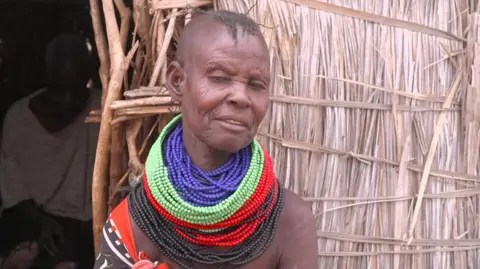
Lotkoy Ebey has just five scrawny goats to her name where she once had 50. She has watched the rest of her animals die as the pasture has dried up due to a prolonged drought in her part of north-western Kenya. In her culture in Turkana, where livestock are not merely a source of money but are central to life itself, the depletion of the herd is a disaster that will be hard to recover from.
Although rains have recently started falling in several parts of the country and even caused flash floods in some areas, officials caution that relief will not come immediately to Turkana. According to experts at the local National Drought Management Authority, the rains have been uneven, with some parts of Turkana receiving little to none, while the rainfall remains unpredictable and insufficient to offset the impact of the last two failed rainy seasons.
The drought also affected a vast stretch of land across East Africa, leaving some 26 million people 'facing extreme hunger' in Kenya, Ethiopia, and Somalia, according to humanitarian organization Oxfam. In Turkana county, the effects of the drought are visible everywhere: dry riverbeds cut across the landscape, and grazing fields that once supported herds of goats, sheep, and camels are bare.
The long drought has led to critical food shortages for their owners. For Ebey, eating twice a day has become a luxury; more often, she survives on a single meal, if that. Sometimes she goes five days without eating a proper meal. In a weak and scratchy voice, she tells the BBC that there is only one option left - to search for food in the scrubland.
Under the shade of a nearby tree in Kakwanyang village, three women sit together pounding wild brown fruits from a doum palm or gingerbread tree, known in the area as 'mikwamo'. The fruits can fill a stomach, allowing them to last a little longer. However, they cannot be eaten in large quantities without adverse effects.
Yet, this fruit is now one of the few available food sources for many who used to survive on livestock. With very few men left in the villages as many have left in search of greener grazing grounds, families like Ebey's are in dire conditions and calling out for national support. Despite increasing awareness and pleas for assistance, humanitarian agencies admit that the scale of the crisis remains enormous, and relief efforts are struggling to keep up with the demands.
Although rains have recently started falling in several parts of the country and even caused flash floods in some areas, officials caution that relief will not come immediately to Turkana. According to experts at the local National Drought Management Authority, the rains have been uneven, with some parts of Turkana receiving little to none, while the rainfall remains unpredictable and insufficient to offset the impact of the last two failed rainy seasons.
The drought also affected a vast stretch of land across East Africa, leaving some 26 million people 'facing extreme hunger' in Kenya, Ethiopia, and Somalia, according to humanitarian organization Oxfam. In Turkana county, the effects of the drought are visible everywhere: dry riverbeds cut across the landscape, and grazing fields that once supported herds of goats, sheep, and camels are bare.
The long drought has led to critical food shortages for their owners. For Ebey, eating twice a day has become a luxury; more often, she survives on a single meal, if that. Sometimes she goes five days without eating a proper meal. In a weak and scratchy voice, she tells the BBC that there is only one option left - to search for food in the scrubland.
Under the shade of a nearby tree in Kakwanyang village, three women sit together pounding wild brown fruits from a doum palm or gingerbread tree, known in the area as 'mikwamo'. The fruits can fill a stomach, allowing them to last a little longer. However, they cannot be eaten in large quantities without adverse effects.
Yet, this fruit is now one of the few available food sources for many who used to survive on livestock. With very few men left in the villages as many have left in search of greener grazing grounds, families like Ebey's are in dire conditions and calling out for national support. Despite increasing awareness and pleas for assistance, humanitarian agencies admit that the scale of the crisis remains enormous, and relief efforts are struggling to keep up with the demands.