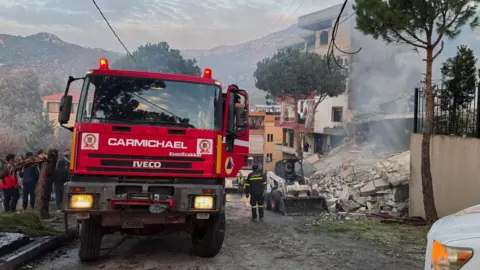
The Israeli military has carried out a new round of air strikes in southern Lebanon, less than a day after Israel and Lebanon held their first direct talks in decades.
Residents of the towns of Mjadel, Baraachit, Jbaa, and Mahrouna were advised to evacuate areas near locations that the Israeli military alleged were weapons warehouses belonging to the Iranian-backed group Hezbollah. No casualties have been reported as a result of the strikes.
An Israeli military spokesman stated that these sites represented a ceasefire violation and warned that the military would continue operations to remove any threat posed to Israel. Daily strikes have resumed in Lebanon since a ceasefire was put in place in November 2024, which ended 13 months of conflict.
There was no immediate reaction from Lebanese officials regarding the recent air strikes. However, Lebanese politicians have previously denounced similar actions as violations of the ceasefire.
Under an initial agreement brokered by the U.S. and France, Israeli troops were expected to withdraw from southern Lebanon while Hezbollah would have to remove its fighters and weapons from territories south of the Litani river, approximately 30km (20 miles) from the Israeli border—a plan that Hezbollah and its allies oppose.
In recent weeks, Israel has intensified its air strikes in response to Hezbollah's efforts to rebuild its military infrastructure amidst what Israeli officials deem insufficient actions by the Lebanese government to disarm the group.
Remarkably, these military actions occurred shortly after talks were held in the Lebanese border town of Naqoura, representing the first direct discussions in decades. Civilian envoys from both sides attended, with the discussions being hosted by the United Nations peacekeeping mission in Lebanon, Unifil.
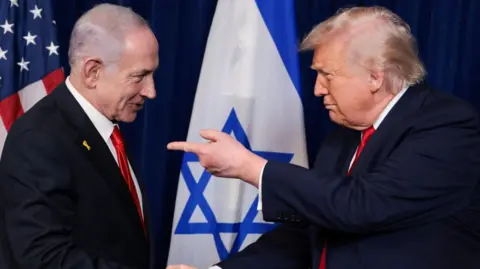
Israeli Prime Minister Benjamin Netanyahu noted a positive atmosphere during the talks, where it was agreed upon to explore possibilities for economic cooperation between Israel and Lebanon. However, he stressed that disarming Hezbollah remains a prerequisite for advancing any economic dialogue.
Lebanese Prime Minister Nawaf Salam, while acknowledging the talks, clarified that Lebanon was not yet approaching diplomatic normalization with Israel and reaffirmed the necessity of ceasing hostilities, addressing detainee issues, and ensuring Israel's full withdrawal from its territory.
The ongoing military strikes and diplomatic interactions coincide with a visit from a UN Security Council delegation to Lebanon to assess the stalled implementation of the ceasefire.