In brief
Duane “Keffe D” Davis, a former leader of the Compton Crips, was sentenced to a minimum of 40 years in federal prison for orchestrating the 1996 murder of Tupac Shakur. The jury found him guilty of one count of murder with a deadly weapon, citing his role as the ringleader who supplied the gun used in the drive‑by shooting in Las Vegas. The case, a long‑running cold case, had sparked numerous conspiracies until Davis’s confession and memoir disclosures eroded the protective agreement that had previously shielded him. Shakur’s family demanded the harshest penalty, citing the lasting impact of his death. Davis has vowed to appeal, with the trial marking a significant closure to a mystery that had haunted the hip‑hop community for decades.
Duane “Keffe D” Davis, a former leader of the South Side Compton Crips, was sentenced to a minimum of 40 years in federal prison today for orchestrating the 1996 murder of rapper Tupac Shakur. The jury found him guilty of one count of murder with a deadly weapon, holding him responsible for ordering the drive‑by shooting in Las Vegas that killed the 25‑year‑old icon.
Prosecutors argued that although Davis never fired the gun himself, he supplied the weapon used by nephew Orlando Anderson and staged the whole operation. Davis admitted in his memoir, “Compton Street Legend,” that he had given the gun and was the ringleader.
This judgment marks the first conviction in a case that had driven speculation for nearly three decades. The attack on Shakur, which sold over 75 million records worldwide, remained a chilling cold case until Davis’s statements in a secret 2008 police interview and his 2019 book eroded a prior protective agreement.
Shakur’s family pressed for a severe sentence. Sister Sekyiwa said, “The loss of Tupac crippled my family for a long time. He had so much promise and intention for a better world.” Brother Maurice reiterated, “I want the longest possible sentence.”
“You don’t get to take a man from his family.”
Judge Carli Kierny warned Davis that the world would never forget Shakur’s death, underscoring the case’s cultural impact. Davis vowed to appeal, declaring, “I’m good. I’m going to appeal this case for sure.”
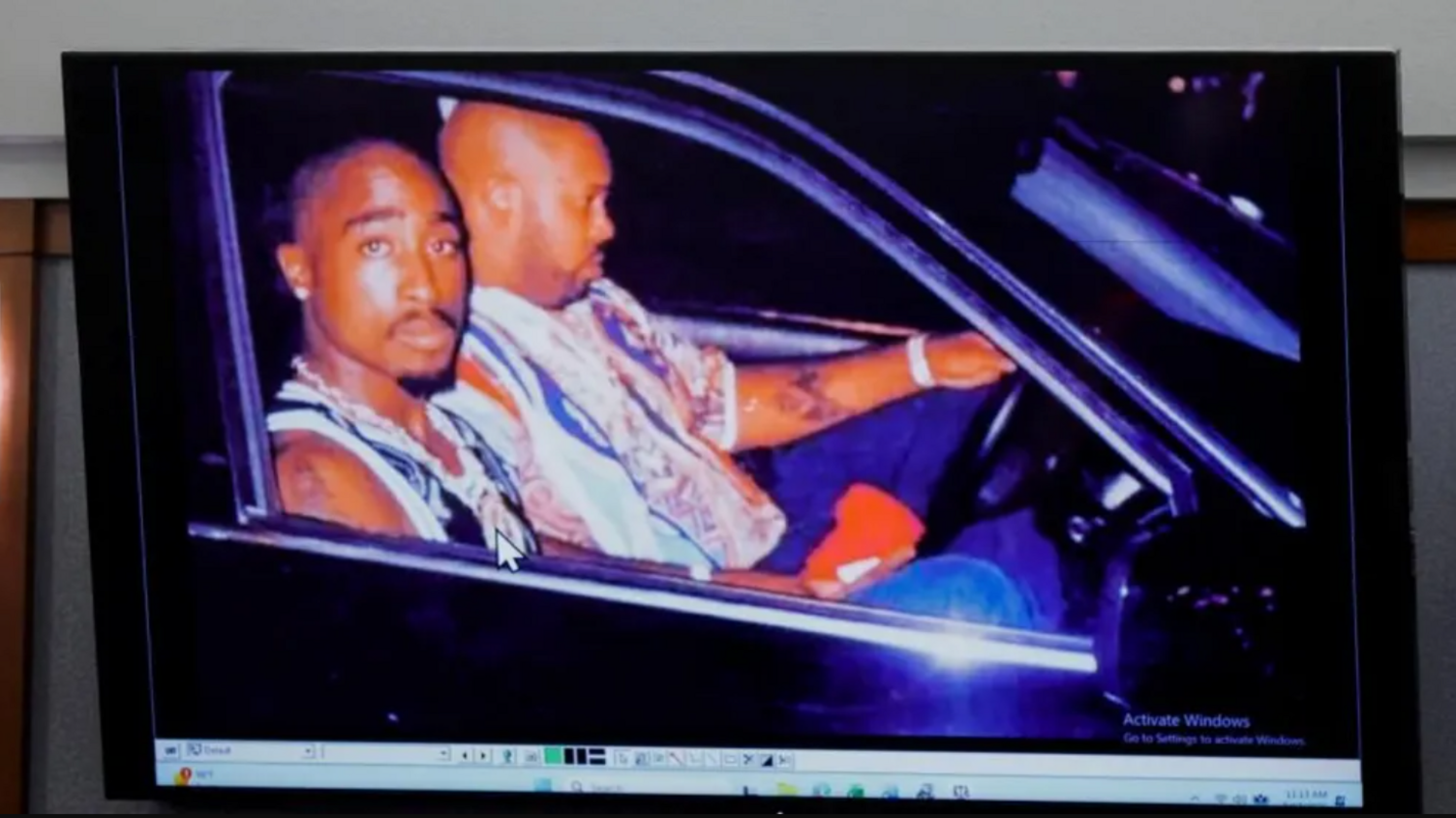
A 1996 photo of rapper Tupac Shakur and Marion “Suge” Knight displayed during the murder trial