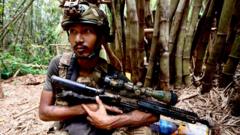
In the forested mountains of Myanmar, four young men find themselves unwilling actors in a war that has unmoored the nation for over a decade.
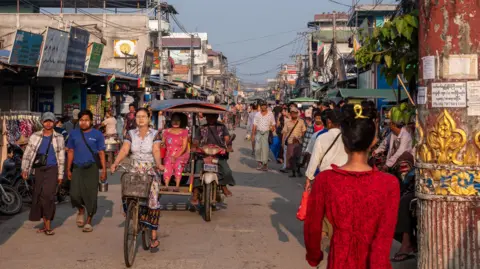
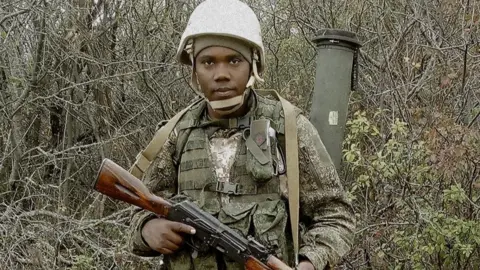
They were not chosen to fight; they were grabbed. One, a chef heading home from work, was seized on the street when he failed to show legal ID, and the army forced him to sign up. Another, caught on his way back from a late-night karaoke session, was apprehended and conscripted against his will. A third, employed by the forestry department, was arrested and marched into a military base. The fourth was deceived—drugs were slipped into his shoe, and he was framed and compelled to enlist.
These four, aged between 19 and 25, describe how the army hurried them to the front lines after only a brief period of basic training. They endured grueling hours—no respite at dawn, midday, or night—while the regular troops were spared such hard work.
When they tried to escape once, they were caught by a nearby PDF patrol and taken into a rebel camp. There they felt welcomed, “like brothers, not strangers.” They shared an intention to be moved by the border with Thailand, where re‑detainment in the military’s hands would be a grave risk.
Co‑founder of the PDF, Ko Kaung, argues that the army’s forced conscription has turned the tide of war. The mass enlistments give the junta limitless manpower, but the rebels have also increased their effectiveness by rallying these new recruits.
The army’s new drone and air‑strike capabilities—augmented by a recent security pact with Russia—make their positions more advanced than ever before. Yet the rebels remain determined to hold strategic towns like Hpapun in Karen state, even as 2,000 soldiers advance toward them.
In Hpapun, the PDF commander Da Wa admits the conscripts are a challenge, describing how many soldiers have become better at following orders even as they lack training. He explains tactics have shifted, with the junta now operating any pair of aircraft that was once single‑winged, using drones to monitor the rebels.
“We seek ways to jam drones… to defend ourselves against these air attacks,” Da Wa says. He remarks that the frontline is far more dangerous, with the army’s oxygen‑level of drones able to dominate the fighting fields.
On the rebel side, Kyar Soe, a platoon commander wounded in battle, now waits in a field hospital, a modest establishment run on solar power and a backup generator. He speaks of dire shortages, especially ammunition, and the high cost of operating a small medical facility in jungle terrain.
Despite severe injuries—a land‑mine left his right leg largely gone—Kyar Soe remains resolute. He declares he will return to war because the alternative of peace, he argues, is not yet a possibility.
A doctor, Dr Saung, runs this field hospital on a shoestring budget but maintains an inspirational outlook for the young fighters. He tells them their rebellion stems from a responsibility left unmet by past generations.
In a quiet moment, a woman named May Kyut Mon gives birth in a makeshift birthing ward. Her husband, Yine Chit, sings chants from a phone after forgetting the words, while the baby, named Sue Paye, means “fulfilled wish.” They dream of a free Myanmar where they can cross family boundaries once their war ends.
These personal stories inside Myanmar’s war‑troubled front illustrate how the army’s conscription has interested a wide spectrum of civilians. The rebels’ persistence and the human cost of the conflict remain a stark reminder that the junta’s victory is far from assured.