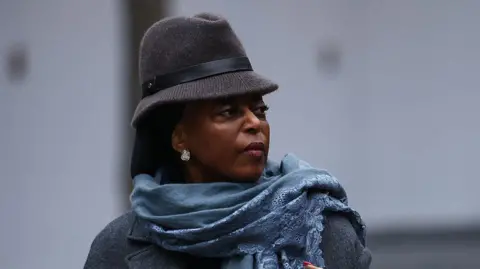
The former oil minister of Nigeria, Diezani Alison‑Madueke, was acquitted of five counts of accepting bribes in a London court that concluded in 2026. The judge found no proof that she had accepted luxury home stays or lavish spending from wealthy oil executives, leading to a not‑guilty verdict on both bribery and conspiracy charges.
Alison‑Madueke held office between 2010 and 2015, and was the first woman to become president of the Oil and Natural‑Gas Producers (OPEC). The investigation, overseen by Britain’s National Crime Agency (NCA), had spanned 13 years, prompting criticism about the fairness of the charge and possible procedural lapses.
The defence challenged the prosecution’s case, arguing that essential documents proving her innocence had disappeared in Nigeria. They also contended that the extended delay in bringing the case to a courtroom was a sign of a broken criminal‑justice system in Britain.
Alongside Ali‑Madueke, her older brother, Archbishop Doye Agama, and oil executive Olatimbo Ayinde were also cleared of bribery and related charges. Ayinde, who held dual Nigerian-British citizenship, had acted as an informant for Nigerian authorities, providing evidence that helped the investigation.
Critical Questions and Concerns
Defence lawyers questioned why the Nigerian government had not prosecuted Ali‑Madueke and why the NCA failed to extradite the six alleged oil men who allegedly paid her. They also highlighted that evidence from Nigeria’s Economic and Financial Crimes Commission (EFCC) could not be accessed during the search of her Abuja residence.
The court abstained from clarifying why the accused were not charged with bribes, and the prosecution’s handling of EFCC evidence was criticized. Moreover, testimony suggested that she had often been “kept prisoner” in the UK for 11 years, unable to work or travel while awaiting trial.
In the wake of her acquittal, Ali‑Madueke described the verdict as a relief, stating that a decade of “unjust vilification” had ended. The case highlights ongoing disputes over jurisdiction, evidence integrity, and the treatment of alleged corruption suspects in high‑profile international contexts.