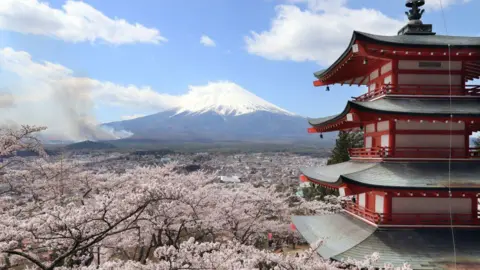
Japanese authorities in a town near Mount Fuji have cancelled this year's cherry blossom festival, citing unmanageable tourist numbers. The influx has led to chronic traffic congestion and litter, with some residents reporting incidents of trespassing and public defecation in private gardens.
The area, known for its breathtaking scenery featuring cherry blossoms against the backdrop of Mount Fuji, typically attracts numerous visitors in the spring. However, the mayor of Fujiyoshida, Shigeru Horiuchi, indicated a growing concern for the residents' quality of life amidst the chaos, stating, We have a strong sense of crisis regarding the impact of tourism on the local environment.
Horiuchi emphasized the need to protect the dignity and living conditions of citizens, leading to the difficult decision to cancel the festival that had been a staple for the community over the past decade. Originally opened to boost tourism in 2016, the annual cherry blossom event aimed to create a lively atmosphere but instead drew overwhelming crowds that exceeded the town's capacity.
Daily visitors during peak bloom have surged to as many as 10,000, driven by factors such as a weak yen and a social media-fueled fascination with the spectacular sights. Local authorities noted that such high numbers have significantly strained community resources, resulting in various disturbances as tourists encroach on private property seeking restroom access or optimal photo spots.
Additionally, this cancellation reflects a broader trend in Japan, with officials in other renowned tourist destinations also taking steps to curb overtourism through measures like fees and restrictions on access to popular sites. For example, authorities in Rome recently introduced a fee for visiting the Trevi Fountain, while Venice has implemented access charges for visitors during peak seasons.