Hungarian Prime Minister Viktor Orban has convened an emergency meeting of the National Defence Council following the discovery of explosives near a gas pipeline that transports Russian gas to Hungary. This incident occurs just days before crucial elections, with Orban's party facing poor performance in the polls.
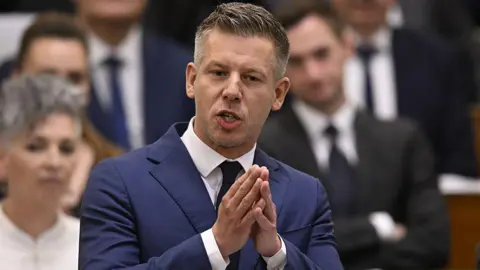
Opposition leader Peter Magyar has accused Orban of 'panic-mongering' and suggested that Russian advisers may be behind the alleged incident, mirroring security experts' warnings of possible 'false flag' operations that could unjustly implicate Ukraine.
Orban, aligned with Russian President Vladimir Putin, has been resistant to EU pressures to halt Russian energy imports since the onset of the Ukraine conflict. The situation escalates with claims from Hungarian security experts suggesting that a staged incident on Hungarian or Serbian soil could generate public sympathy for the ruling party or provide justification for declaring a state of emergency ahead of the elections.
Two rucksacks containing explosives were found by the Serbian army near Tresnjevac, sparking concerns that Hungary's supply lines were targeted. Serbian President Alexander Vucic confirmed the find, describing the explosive power of the materials discovered.
Orban's administration relies heavily on Russian gas, with Hungarian officials emphasizing the risks posed to national energy security. Balint Pasztor, a prominent ally of Orban, claimed that should investigations show the pipeline was the real target, it would orient public perception towards the possibility of a terror attack designed to undermine Orban.
The Fidesz party's campaign has capitalized on anti-Ukrainian sentiment, portraying the country as a threat to Hungary's energy security while blaming Ukrainian President Volodymyr Zelensky for disruptions in oil supplies through pipelines crossing Ukraine.
Amidst these tensions, Hungarian officials have maintained that the threat posed by potential attacks is genuine. Foreign Minister Peter Szijjarto framed the incident within a series of actions purportedly aimed at undermining Hungary's energy resources.
In the face of these allegations, opposition leaders remain firm, suggesting that any attempt by Orban to manipulate perceptions around this incident will not thwart attempts to alter what they describe as a two-decade-long corrupt regime.