In brief
Ukrainian frontline medics are utilizing a new magnetic device for the minimally invasive extraction of shrapnel from injuries, a process that has become increasingly crucial due to the surge in drone warfare. Not only does this technology enhance survival rates among trauma victims, but it also streamlines surgical procedures under strenuous conditions.
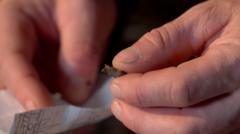
Ukrainian serviceman Serhiy Melnyk can recount a life-altering moment when shrapnel from a Russian drone found its way into his heart during a battle in eastern Ukraine. In a poignant reflection, he holds up a small, rusty shard and shares the harrowing experience of surviving an injury that could have been fatal without the aid of modern medical technology: a magnetic extractor.As drone warfare intensifies in Ukraine, injuries like Serhiy's have become increasingly common, with shrapnel wounds now accounting for 80% of battlefield trauma, according to military medics. Serhiy recalls that he initially dismissed his symptoms, assuming he was simply struggling to breathe beneath his body armor. "They had to extract shrapnel out of my heart," he states, emphasizing the critical nature of timely medical intervention.Dr. Serhiy Maksymenko, a cardiovascular surgeon, has played an instrumental role in utilizing the magnetic extractor in surgery. "I make a small incision and insert the magnet," he explains, showing how the device delicately removes foreign objects without extensive damage to the heart. Dr. Maksymenko and his team have performed over 70 successful operations with the magnetic device in the past year itself, marking a pivotal advancement in frontline medical care.The magnet extraction technique has evolved from earlier approaches, with innovations driven by volunteer Oleh Bykov, whose journey has been shaped by his experiences supporting the military since conflict erupted in 2014. Inspired by battlefield challenges, he and his team developed flexible and high-strength extractors suitable for various surgical scenarios. These advancements underscore a shift in battlefield medicine where the speed and efficiency of treatment are paramount.Oleh pivots to demonstrate the extractor’s functionality by effortlessly lifting a sledgehammer with the magnetic tool. Its efficiency has garnered praise from seasoned medics like David Nott, who notes that modern warfare has necessitated rapid development of such tools, often bypassing traditional certification processes in favor of immediate life-saving capabilities.Operating amid the chaos of war, medical professionals like Andriy Alban rely heavily on the magnetic extractors. They work under perilous conditions, often without sufficient anesthesia, emphasizing the urgency of their mission to save lives amidst a relentless conflict. Despite the absence of official certification for the devices, the urgency of wartime medicine allows for the adoption of innovative technologies that prioritize patient survival over bureaucratic standards.For some, like Serhiy’s wife Yulia, the gratitude toward the creators and implementers of this technology is palpable. “Thanks to them, my husband is alive,” she expresses emotionally, highlighting the profound impact of medical advancements amidst the ravages of war.Though there are discussions surrounding the regulatory aspects of these devices, the consensus among many frontline medics is clear: the devices save lives, pushing the boundaries of innovation and humanitarian care to adapt to the urgent needs of conflict zones around the world.