Iran Sees US Deal as Strategic Victory
For Iran, what now appears to be a temporary ceasefire between Tehran and Washington is framed as a moment of national triumph – a way to demonstrate that the Islamic Republic has survived the conflict without capitulating.
The Memorandum of Understanding (MOU) signed by former US President Donald Trump and President Masoud Pezeshkian sets a 60‑day timetable for negotiating a restart of the nuclear program, but also calls for immediate halting of all military actions in the region – from Lebanon to the Israeli‑controlled enclave of Gaza – and guarantees the re‑opening of the crucial Strait of Hormuz and the lifting of the US naval blockade on Iranian shipping.
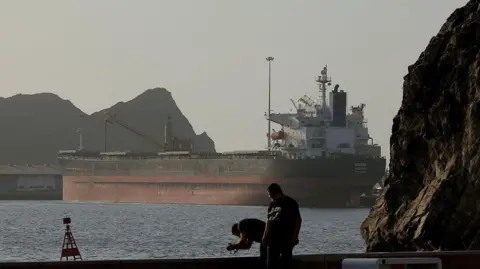
Shipping in the Strait of Hormuz on Wednesday
Iran’s short‑term obligations are limited: it must ensure safe passage through Hormuz, reaffirm its commitment not to pursue nuclear weapons, and enter talks about the future of its highly enriched uranium and the scale of its enrichment industry.
Washington’s side includes ceasing the naval blockade, issuing waivers for Iranian oil exports, making frozen or restricted Iranian assets available, easing sanctions and outlining a reconstruction plan worth roughly $300 bn for Iran – a figure that supports the claim of a negotiated settlement rather than a surrender.
Domestic critics have been largely silent so far, allowing the Iranian leadership to present the MOU as a decisive victory: sovereignty acknowledged, sanctions relief on the table, and a pathway toward reconstruction that was denied in previous negotiations.
The hardliners that won against President Hassan Rouhani over the 2015 nuclear deal are now in a position where any further compromise over enriched uranium could be used to label the government a traitor, whereas failing to reach a compromise might collapse the ceasefire and reignite conflict in the region.
Mo Ulia’s spokesperson Mohammad Bagher Ghalibaf boldly portrays the negotiations as a display of strength, saying, “I am not a diplomat, but I know well how to make America understand.” Yet the same words must be tuned to a domestic audience that is wary of concessions to the US.
In Washington, some analysts view the MOU as a step backwards compared with the Joint Comprehensive Plan of Action, arguing that the U.S. offers economic benefit while leaving the most difficult nuclear questions in limbo. In Tehran, the danger is reversed; hardliners may accuse the government of blindly repeating past concessions for the sake of peace.
The foremost risk for Iran is that the next 60 days expose the gap between the narrative of victory sold at home and the compromises required to keep the war from returning. The leadership faces the tightrope of maintaining domestic support while negotiating with the U.S. on nuclear matters that, if stalled, could revive tensions along Iran’s borders and beyond.
While the MOU has delivered immediate relief and a promise of economic rehabilitation, the longer‑term success of Tehran hinges on its ability to turn a temporary pause into a lasting agreement without alienating its own hard‑line constituency or giving the impression of defeat.