In brief
A group of 24 endangered Kemp's ridley sea turtles is recovering at the Loggerhead Marinelife Center in Juno Beach, Florida, after being rescued from freezing conditions along Cape Cod. The turtles, affected by cold stunning, are expected to stay at the facility until spring when they will be released back into the Atlantic Ocean. Their rehabilitation includes treatments for frostbite, pneumonia, and other ailments, with a unique naming convention based on Greek mythology.
JUNO BEACH, Fla. — Two dozen Kemp’s ridley sea turtles are receiving treatment in Florida after being affected by frigid waters off Cape Cod, Massachusetts, which left them battling frostbite, pneumonia, and abrasions.
The 24 endangered turtles were brought to the Loggerhead Marinelife Center in Juno Beach, Florida, on December 9, facilitated by the nonprofit organization LightHawk. This center has previously welcomed cold-stunned turtles for rehabilitation and return to the Atlantic.
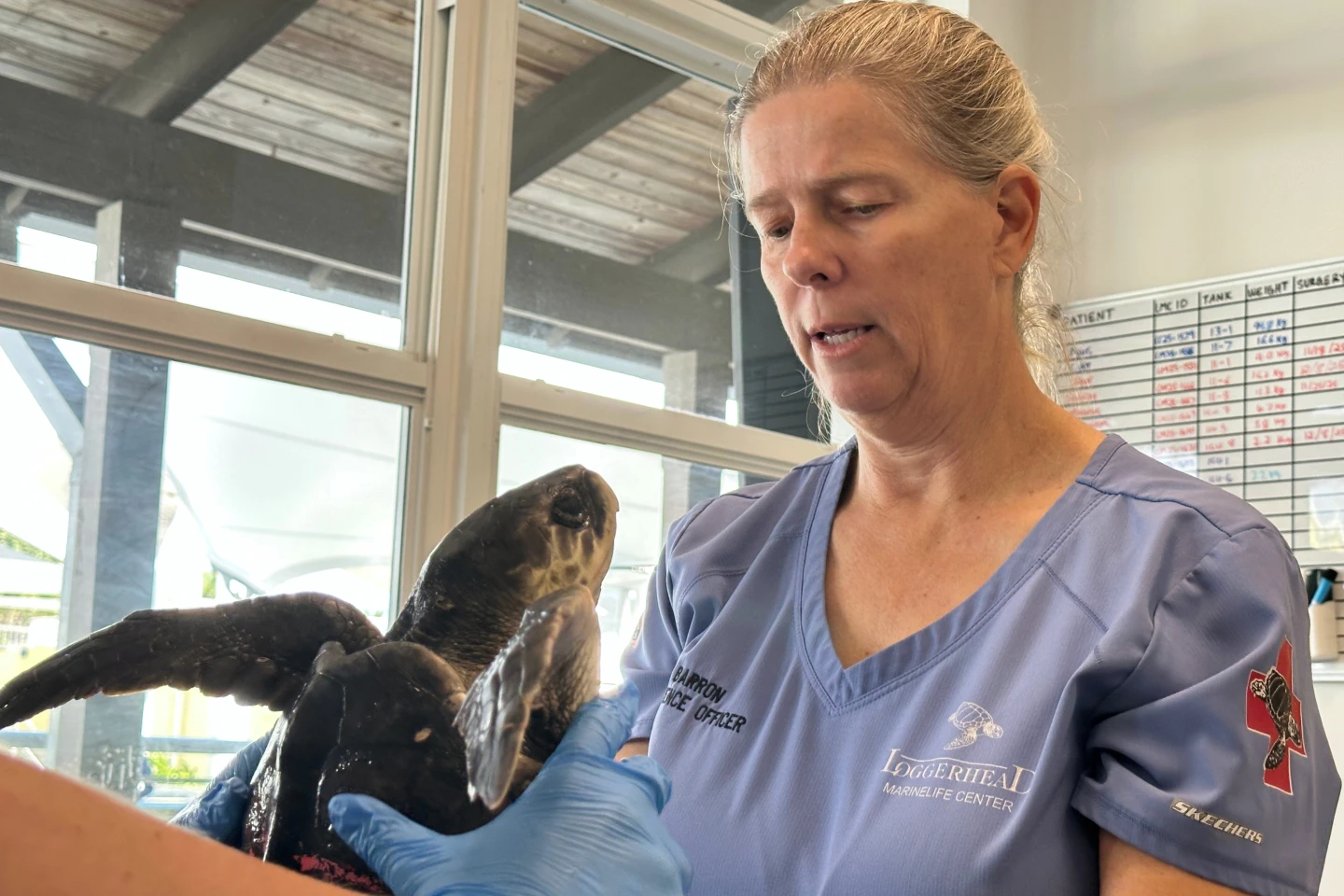
Heather Barron, chief science officer and veterinarian at Loggerhead, explained that the turtles are being treated for a condition known as cold stunning, necessitating antibiotics, fluids, and nebulization treatments.
Cold stunning occurs when the water temperature drops significantly, resulting in lethargy, loss of mobility, and other severe health issues for these cold-blooded creatures. Typically affected species include Kemp’s ridley, loggerhead, and green sea turtles.
These turtles migrate north during the summer months but often get trapped in the Cape Cod hook during late fall, where they can wash ashore during cold weather events. From November 7, during this year's cold-stunning phenomenon, over 470 hypothermic turtles have been treated.
In order to alleviate overcrowding at the New England Aquarium, many of these turtles were transferred to Florida. Pam Bechtold Snyder, the director of marketing and communications at the Boston facility, shared that many turtles were stranded due to strong winds before transport.
Once they arrive at Loggerhead, the turtles are typically hospitalized for several months until they are well enough to be released back into their ocean habitat. This group of turtles will remain until spring before being transported back to New England.
As part of their care, the hospital staff collaborates with the National Oceanic and Atmospheric Administration’s Fisheries Service to ensure the turtles’ recovery. They are treated extensively, given names that align with a certain theme, which in this case is Greek mythology, including names like Pandora, Gaia, and Helios.
“These guys are very critically ill when they get here, and they are undergoing extensive treatment,” Barron remarked regarding the turtles admitted for care. “They can breathe better through nebulization, which enhances their lung function.”