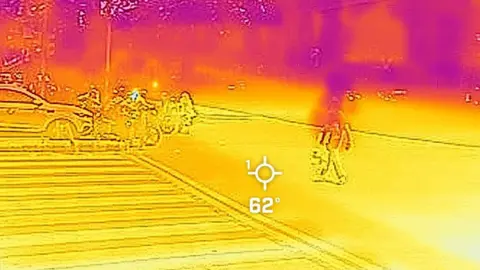
The United States is experiencing an unprecedented heat wave in March, pushing temperatures to record highs across the Southwest. April's first week saw cities in Arizona and southern California reaching temperatures of up to 110°F (43.3°C), marking the hottest March day on record in the nation. Experts attribute these extreme heat conditions primarily to climate change, which has significantly altered historical weather patterns.
Andrew Weaver, a climate scientist from the University of Victoria, states, This is what climate change looks like in real-time: extremes pushing beyond the bounds we once thought possible. Evidence suggests that the changes in temperature patterns are linked to human-induced climate change, which has made such high temperatures likely. A report from World Weather Attribution indicates that the recent heat waves would have been virtually impossible without climate change, highlighting the urgent need for immediate action against rising global temperatures.
Climate experts are now classifying the heat wave alongside other significant weather events, such as the catastrophic floods in Pakistan and various recent hurricanes. Since the last two decades, areas in the U.S. subjected to extreme weather have doubled, indicating a worrying trend that poses increased risks to public safety and infrastructure.
Notably, the National Oceanic and Atmospheric Administration's Climate Extremes Index reveals rising records of hot weather. Over the years, the U.S. has seen a marked increase in the frequency of billion-dollar weather disasters, driven partly by escalating climate crises.
Officials and experts are warned that traditional models used in disaster preparedness are no longer reliable, with significant changes in weather patterns rendering past data insufficient. Craig Fugate, former director of FEMA, remarked that operational models must evolve to keep up with the swift intensification of extreme weather, as reliance on historical weather trends becomes a dangerous gamble.
As this heat wave proves to be a destructive force, indications of its association with climate change emphasize the pressing necessity for urgent climate action and policy adjustments. The time for transition towards sustainable practices to manage extreme weather effectively has never been more critical.