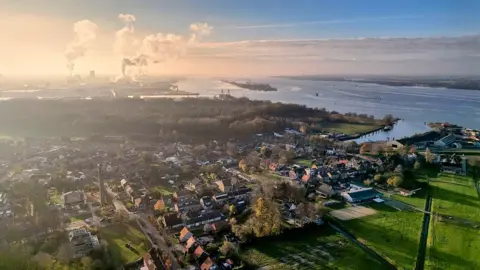
In the south of the Netherlands, beside a wide estuary, a village of around 1,100 people is likely to disappear from the map. Moerdijk, a small fishing community 34km south of Rotterdam, is on the fault line of the nation's green energy transition.
The Dutch government says the country needs vast new sites to build high-voltage substations where cables carrying electricity from growing offshore wind farms can be connected to the national grid. Yet the Netherlands is short of land. Officials argue that Moerdijk, which is on the southern shore of the Hollands Diep estuary, and well located next to ports, motorways, and existing overhead power lines, is a prime location for such a facility.
So the residents face the real threat of seeing their homes demolished at some point in the next decade, and the village potentially vanishing.
We are being brought to the slaughter house, says fishmonger Jaco Koman. His family has trawled for their livelihoods in these waters since 1918, and the idea of losing their history and community haunts him. Many residents, like Koman, emphasize that while they understand the importance of renewable energy, why should that burden fall on their village?
The unease and sense of limbo in Moerdijk is palpable; for sale signs punctuate gravel driveways as potential buyers hesitate in a town teetering on the brink of upheaval. Andrea, a local grocery store owner, reflects on personal stakes, including family ties and a deep-rooted sense of belonging.
The impending decisions reflect a larger national dilemma in the Netherlands, where demands for land for housing, nature, and renewable energy clash against limited space. The balance of power also plays a critical role, with the central government positioned to enforce its will against local opposition.
Ultimately, life in Moerdijk symbolizes the struggle between a tight-knit community’s desire to preserve its way of life and the government’s push for energy security amidst the global climate crisis. The question remains: is sacrificing a village justifiable for the greater good of transitioning to greener energy sources?