Myanmar has denied committing genocide against the Rohingya people, stating that The Gambia has failed to provide enough evidence, as it commenced its defense at the UN's top court.
Ko Ko Hlaing, a representative of the Myanmar government, told judges at the International Court of Justice (ICJ) that the allegations were unsubstantiated.
Earlier in the proceedings, The Gambia's foreign minister, Dawda Jallow, reported to the court that Myanmar aimed to erase the minority Muslim population through its alleged use of genocidal policies.
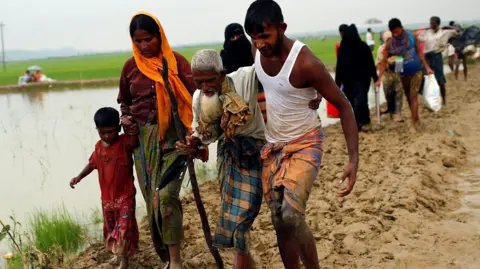
Since 2017, thousands of Rohingya have reportedly been killed, with over 700,000 fleeing to neighboring Bangladesh during a military crackdown.
A 2018 UN report prompted calls for investigation into Myanmar’s military leaders for genocide and crimes against humanity. In response, Myanmar – under military rule since a coup in 2021 – has consistently rejected these accusations, asserting that their military operations were aimed at addressing insurgent threats.
In court, Hlaing stated that Myanmar was justified in its operations in northern Rakhine, where most Rohingya reside, claiming they were necessary counter-terrorism actions.
The Gambia initiated the case against Myanmar in 2019, claiming a moral imperative due to its own history with a military government. In the ICJ proceedings, Jallow described the decades of persecution faced by the Rohingya leading to the military’s violent crackdown as a genocidal intent by Myanmar against this population.
With over a million Rohingya refugees now situated in Bangladesh, The Gambia’s lawyers argue that the atrocities committed cannot solely be interpreted as counter-terrorism measures.
Myanmar’s representative declared the country’s dedication to the repatriation of Rohingya refugees, although he mentioned external hindrances such as COVID-19. Hlaing emphasized the detrimental impact a genocide ruling would have on Myanmar’s international reputation.
The court proceedings include testimonies from Rohingya survivors, but those sessions will be closed to the public. A final ruling is anticipated towards the end of 2026, possibly setting a precedent for future genocide cases.
The 1948 UN Genocide Convention defines genocide as acts committed with the intent to destroy, wholly or partially, a national or ethnic group.