In brief
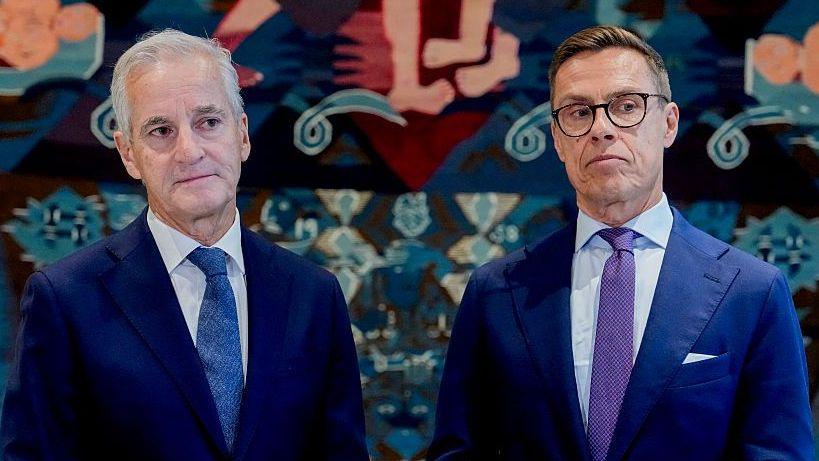
Finland’s President Alexander Stubb and Norway’s Prime Minister Jonas Gahr Støre spoke to Russian President Vladimir Putin by phone on Tuesday, the first direct contact between Putin and a European leader since 2025. They discussed potential diplomatic steps to end the war in Ukraine, urging a reduction of confrontational EU and NATO policies that Putin said prolong the conflict. The call took place from Helsinki and was followed by Ukrainian President Volodymyr Zel Šensky’s meeting with the Nordic leaders and the US special envoy. Russia’s stance remains that supplying Ukraine with weapons fuels the war, while Moscow at the same time welcomes a European negotiator at upcoming talks. Danish Prime Minister Mette Frederiksen expressed skepticism about the bilateral dialogue, saying it was not coordinated with other European partners.
Finland’s President Alexander Stubb and Norway’s Prime Minister Jonas Gahr Støre held a phone conversation with Russian President Vladimir Putin on Tuesday, marking the first direct contact between Putin and a European head of state since the July 2025 call with French President Emmanuel Macron. They spoke from Helsinki and focused on possible diplomatic steps to end the conflict in Ukraine, urging a shift away from “confrontational” EU and NATO policies that, according to Putin, prolong the war.
The leaders emphasized that their outreach was not on behalf of “Europe as a whole”, but rather an attempt to affect a wider conversation about peace and stability in the region. Stubb and Støre highlighted the importance of ending the war’s “enormous human and material costs” and the impact it will have on future generations.
Following the call, Ukrainian President Volodymyr Zelensky met with the Nordic leaders and US special envoy Steve Witkoff, setting the stage for trilateral talks slated for Abu Dhabi in November. Those discussions aim to explore formats for deeper cooperation on diplomacy, defence and shared security.
While Moscow accuses European leaders of feeding the conflict by supplying weapons to Ukraine, Kremlin spokesman Dmitry Peskov said that having a European negotiator at the peace table would be “good”. Danish Prime Minister Mette Frederiksen, however, called the dialogue “very skeptical” and claimed it was not coordinated with other European partners.
The conversation comes amid unresolved tensions between the US, Ukraine and European allies, especially after former US President Donald Trump allowed Russian oil to reach the United States, a move that had strained relations.