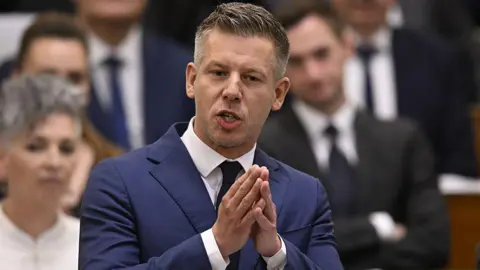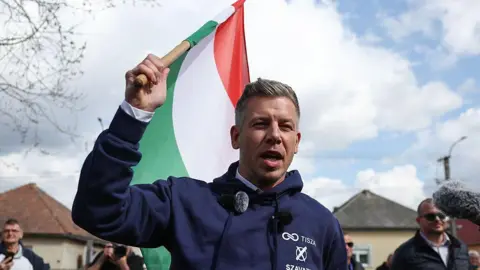
Peter Magyar, a former ally of Viktor Orban, is gearing up to contest the upcoming April elections in Hungary. With a history within the ruling Fidesz party, where he held various significant roles, Magyar is now presenting himself as the voice of change with a campaign steeped in urgency, urging Hungarians to act Now or never. This slogan, rooted in a historical rallying cry, signifies his call to action among voters, many of whom feel disenfranchised by the current administration.
At 45 years old, Magyar has become a prominent figure in the political landscape, marking a considerable threat to Orban’s decade-long grip on power. His campaign has involved extensive engagement over two years, including visiting every constituency in Hungary, and openly addressing issues like corruption and economic stagnation. Despite facing criticism from Orban, who labelled him a puppet of foreign powers, Magyar maintains a strong public support base.
A notable moment came during a live interview on a pro-opposition platform, where he boldly critiqued the Fidesz party and articulated why he could no longer be a part of the system. This decisive shift followed a scandal involving the resignation of several government officials, creating an opportune moment for Magyar to distance himself from Fidesz and position himself as a reformist.
While promising to rally traditional supporters, including Hungary's Roma community, Magyar has also pledged to unlock frozen EU funds, addressing the latent economic concerns stemming from mismanagement. In stark contrast, Orban has responded to Magyar’s rise by maintaining his position as the protector of national interests, accusing his rival of being aligned with opposition forces backed by the EU.
The upcoming election marks a critical juncture not just for Magyar but for Hungary, as he rallies supporters under a banner that seeks to resurrect the possibility of democratic engagement and a government accountable to its people. As the political landscape evolves, Magyar's campaign signifies a potential shift away from Orban's long-standing dominance, beckoning a new dialogue about Hungary's future.
At 45 years old, Magyar has become a prominent figure in the political landscape, marking a considerable threat to Orban’s decade-long grip on power. His campaign has involved extensive engagement over two years, including visiting every constituency in Hungary, and openly addressing issues like corruption and economic stagnation. Despite facing criticism from Orban, who labelled him a puppet of foreign powers, Magyar maintains a strong public support base.
A notable moment came during a live interview on a pro-opposition platform, where he boldly critiqued the Fidesz party and articulated why he could no longer be a part of the system. This decisive shift followed a scandal involving the resignation of several government officials, creating an opportune moment for Magyar to distance himself from Fidesz and position himself as a reformist.
While promising to rally traditional supporters, including Hungary's Roma community, Magyar has also pledged to unlock frozen EU funds, addressing the latent economic concerns stemming from mismanagement. In stark contrast, Orban has responded to Magyar’s rise by maintaining his position as the protector of national interests, accusing his rival of being aligned with opposition forces backed by the EU.
The upcoming election marks a critical juncture not just for Magyar but for Hungary, as he rallies supporters under a banner that seeks to resurrect the possibility of democratic engagement and a government accountable to its people. As the political landscape evolves, Magyar's campaign signifies a potential shift away from Orban's long-standing dominance, beckoning a new dialogue about Hungary's future.