In brief
Amidst the relentless conflict in Gaza, residents face a prolonged blackout that has persisted for over a year, fundamentally altering their living conditions and daily routines.
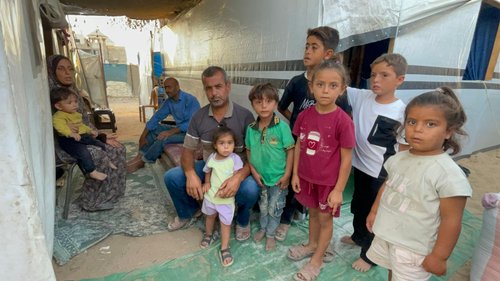
The light fades as evening descends in Deir al Balah, where Mariam Abu Amra gathers her six children close to their makeshift evening fire. The family's anxiety peaks with darkness; their home becomes a shadowy void, as flickering cellphone screens struggle to provide limited illumination. “Every night is a struggle for us,” shares the 36-year-old mother. Since the onset of hostilities over a year ago, the already challenging existence for Gazans has deteriorated further as Israel cut off electricity supplies to diminish Hamas' capabilities.This yearlong blackout has turned ordinary necessities—medical equipment, basic sanitation, and even indoor lighting—into inaccessible luxuries. Cooking over open flames and doing laundry by hand before sunset has become the norm for Ms. Abu Amra. “I have to wake up early now so I don’t miss a single minute of daylight,” she laments, reflecting on a shift in lifestyle that once thrived on electricity.The humanitarian impact stretches beyond mere inconvenience. Children play with nonfunctioning electrical cables near the Rafah border, symbolizing the loss of connection to modernity. This prolonged deprivation demonstrates the far-reaching consequences of the ongoing conflict, where the power struggle translates into daily survival challenges for ordinary families.