In brief
In San Francisco, a teachers' strike has left 50,000 students out of school and parents scrambling for childcare solutions. Connor Haught, a father of two, is managing remote work while coordinating activities for his daughters. The strike, which stems from demands for better wages and resources, has parents seeking out after-school programs and relying on family support. As negotiations continue, the uncertainty looms large over many families.
SAN FRANCISCO (AP) — The current teachers' strike in San Francisco has left parents and students in a state of limbo as nearly 50,000 students remain out of the classroom. Connor Haught, a construction worker who can work from home, has been balancing virtual meetings and keeping his two daughters engaged through arts and crafts. With no end date to the strike in sight, many parents are feeling the pressure of planning for their children's activities.
The big concern for parents is really the timeline of it all and trying to prepare for how long this could go on, Haught shared, reflecting a sentiment echoed by many families in the city.
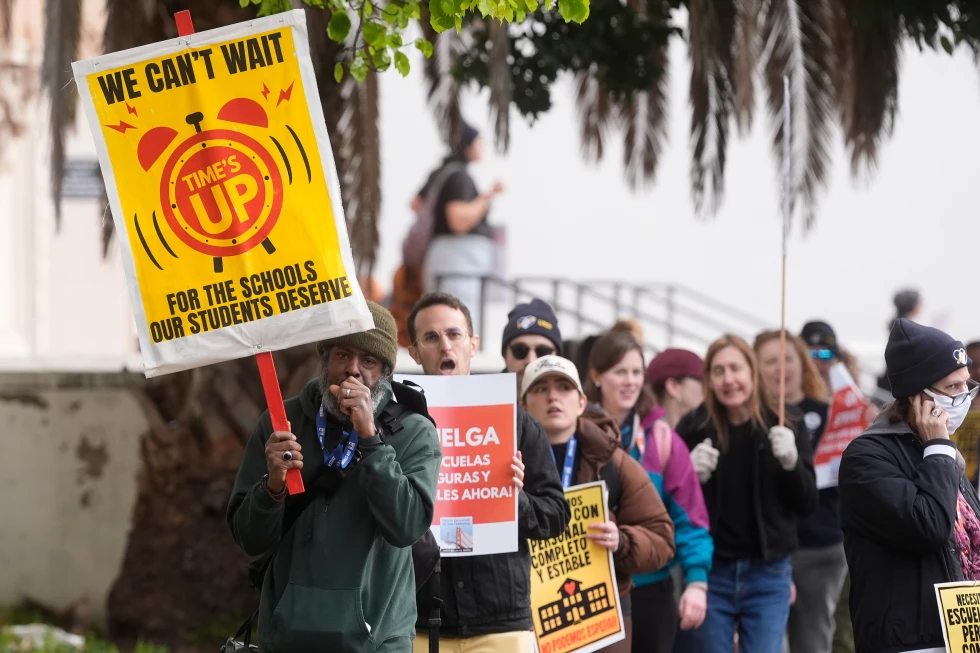
The San Francisco Unified School District has closed its 120 schools for a third consecutive day as approximately 6,000 teachers went on strike seeking higher wages, improved health benefits, and better resources for students with special needs.
While some parents are utilizing after-school programs that provide full-day care, others are leaning on family and friends to help with childcare responsibilities. With the first week of the strike underway, Haught and his wife are making efforts to organize playdates and local excursions with other parents to ease the burden of at-home schooling, but are uncertain about their plans should the strike persist into a second week.
We didn’t try to jump on all the camps and things right away because they can be pricey, Haught said, indicating a need for economical solutions amid the ongoing uncertainty.
The United Educators of San Francisco have been negotiating with the school district for nearly a year, advocating for fully funded family health care, salary raises, and addressing the staffing shortages that affect special education services. Teachers like Lily Perales highlight their motivation for striking is to ensure stability and safety for their students in the long run, emphasizing, This is for the betterment of our students. We believe our students deserve to learn safely in schools and that means having fully staffed schools. That means retaining teachers by offering them competitive wage packages and health care and it means to fully fund all of the programs we know the student need the most.”
Despite some reported progress in negotiations, the stark reality of a $100 million deficit hinders potential agreements, leaving families like Sanabria's more dependent on free community resources as they grapple with the implications of the strike. Parents are faced with hard decisions about work and childcare, balancing the support for striking teachers with the need for their own livelihood.
The hope among parents and educators lies in a quick resolution so that students can return to the classrooms they depend on.