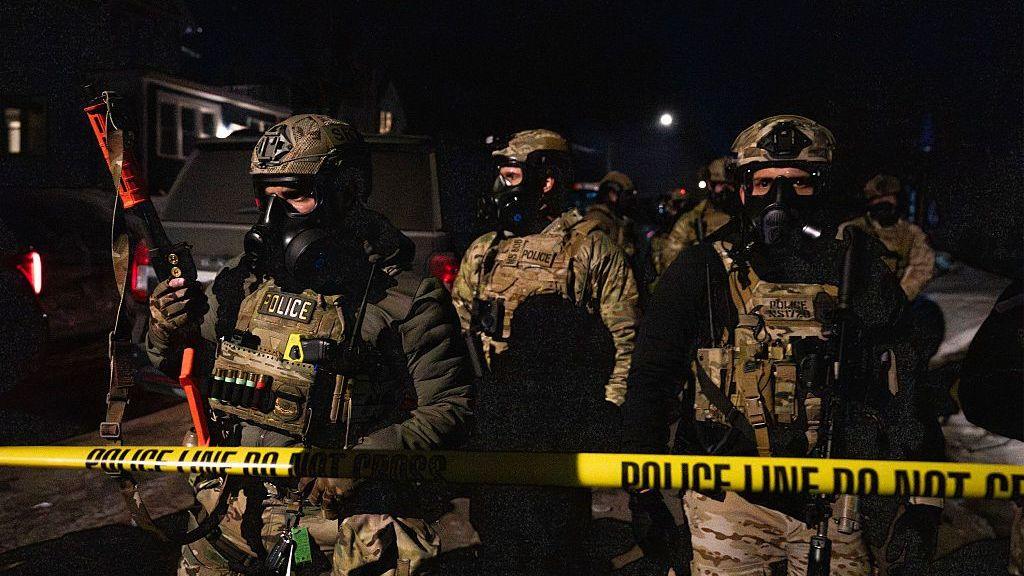
The peak of immigration enforcement in the United States has brought about significant and often controversial changes. In cities like Minneapolis, carloads of masked immigration officers became a familiar sight as conflicts arose over the tactics employed. Weekly arrests surged in states including Texas, Florida, and California, reaching dramatic heights.
Border Patrol Commander Gregory Bovino described the aggressive enforcement strategy as 'Turn and burn,' deliberately targeting places such as restaurant kitchens and parking lots to capture undocumented immigrants.
However, the enforcement operation faced pushback following incidents of violence when two American civilians were killed by immigration officers. This led to significant adjustments within the ICE leadership, contributing to a noticeable reduction in arrests.
National data indicated that ICE arrests peaked at almost 40,000 in December, but decreased by nearly 12% afterwards. Polls showed the public's discontent with the perceived excesses of the enforcement operations, triggering administrative shake-ups within the Department of Homeland Security.
Despite the reduction in overall arrests, certain states reported a contrasting increase, indicating an inconsistent enforcement landscape across the country. Increases were particularly evident in Kentucky and North Carolina. This sharp divergence provokes a critical examination of the effectiveness and morality of immigration enforcement tactics.
Critics argue that the Trump administration's claim of prioritizing 'the worst of the worst' does not align with reality. A significant proportion of those detained had no criminal records, raising concerns about the true focus of immigration enforcement.
Amidst these challenges, experts suggest that while the numbers may be shifting, it's crucial to assess whether these reforms will endure or if the denial of any change in tactics prevails.