In brief
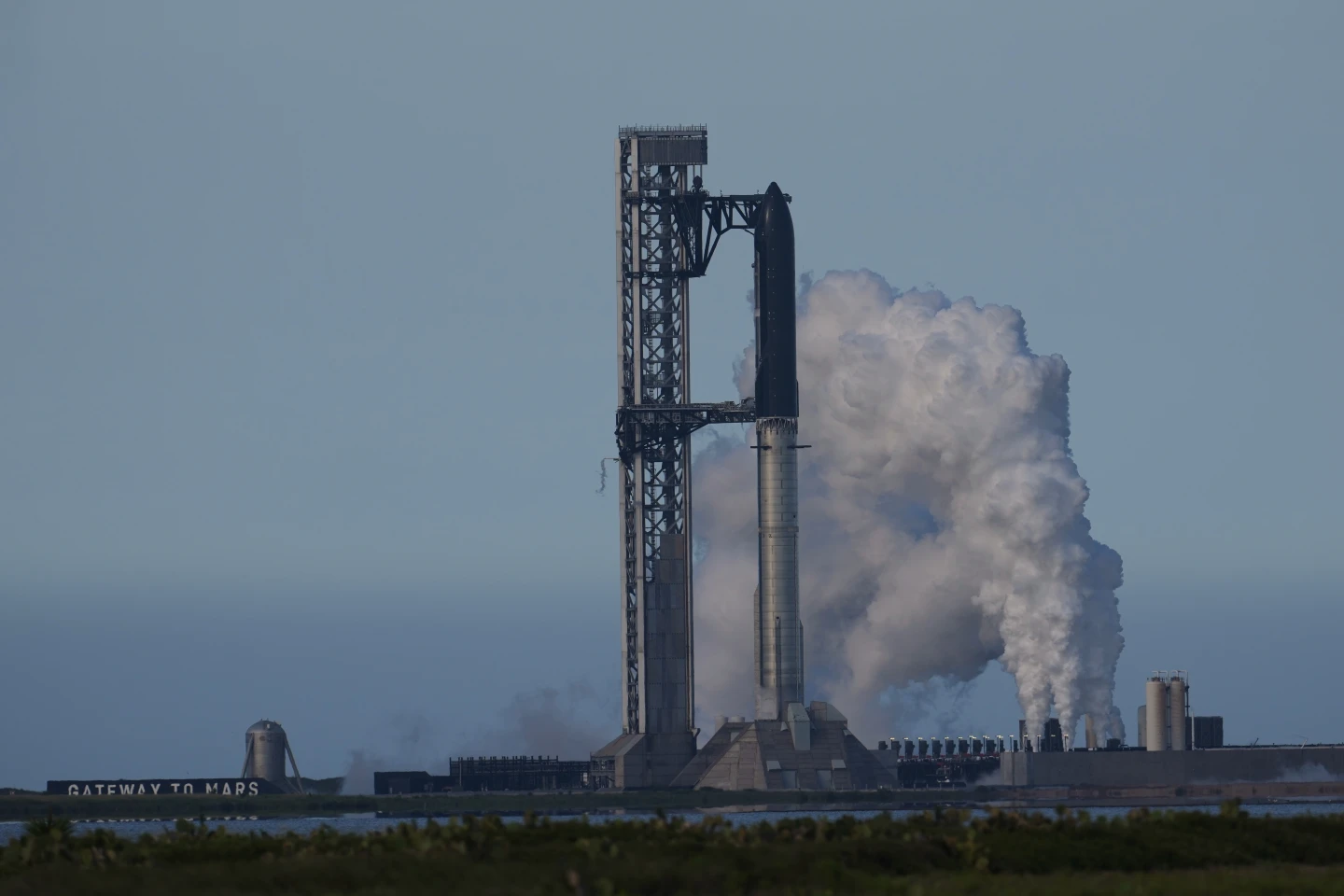
SpaceX's Starship rocket, the largest ever built at 407 feet (124 meters), was halted mere minutes before liftoff Thursday due to a hydraulic pin failure that prevented the launch tower arm from retracting. CEO Elon Musk indicated the issue could be fixed quickly, with a Friday relaunch possible. The delay occurred one day after Musk announced SpaceX's planned public offering, though the flight would have carried 20 mock Starlink satellites for a one-hour test journey ending in the Indian Ocean—this being the 12th Starship test flight since 2023. NASA continues to rely on Starship as the key vehicle for future Artemis moon landing missions.
CAPE CANAVERAL, Fla. — SpaceX's Starship rocket was halted just minutes before liftoff Thursday due to a cascade of technical issues at the Starbase launch site near the Mexican border. The 407-foot (124-meter) vehicle, poised for a test flight extending halfway around the world, faced complications with the brand-new pad infrastructure that forced the countdown to be scrubbed. SpaceX CEO Elon Musk confirmed the hydraulic pin securing the launch tower's arm failed to retract, though he noted the problem could be resolved quickly enough for another attempt Friday.The delay followed Musk's announcement that SpaceX would go public—a move that attracted significant attention to the company's financial ambitions. The planned flight would have released 20 mock Starlink satellites before the spacecraft's controlled entry into the Indian Ocean after a one-hour journey, marking the 12th test flight for Starship since its debut last fall and the first since late 2023.NASA's continued reliance on Starship for the Artemis program underscores its strategic importance, as the agency plans to use the vehicle to land astronauts on the moon within the next few years. While SpaceX's private-sector approach to space exploration has generated debate about its role in national space initiatives, the agency maintains Starship remains critical to its lunar exploration timeline.}