In brief
Former Prime Minister Imran Khan remains largely isolated in prison, with his family alleging that military control over dissent is stifling communication and free expression across Pakistan. Alongside Khan, human rights advocates and journalists face increased pressure and potential imprisonment for their views, suggesting a broader crackdown on dissent under military influence. The government's assertion of control raises concerns about Pakistan's democratic freedoms and the future of public discourse.
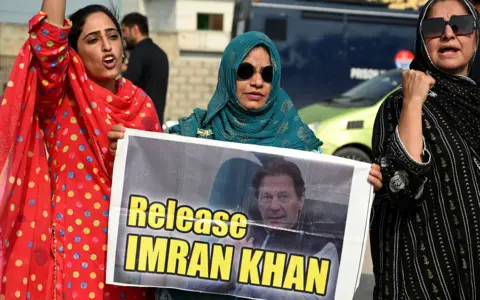
Former Prime Minister Imran Khan has not seen any visitors in over five weeks, a situation his family attributes to efforts by the military to suppress his influence. Khan, jailed since August 2023, has faced significant isolation, with the government claiming that visits were curtailed due to jail conduct violations.
The pressure extends beyond Khan. Numerous journalists, human rights advocates, and political dissidents report that their ability to voice dissent is increasingly curtailed, with some facing harassment and imprisonment. For instance, prominent human rights lawyer Imaan Mazari and her husband were sentenced to ten years in prison for alleged anti-state social media posts.
Many accuse the military of stifling free expression and tightening its grip on politics. Khan's family insists that public discourse is being systematically manipulated, highlighting how critics are silenced through direct and indirect measures. Media outlets have also reported restrictions on coverage of dissenting voices, leading to a chilling effect on journalistic freedom.
Several analysts contend that the military's involvement in civilian governance reflects a troubling trend towards authoritarianism in Pakistan. As restrictions intensify, the implications for free speech and democratic engagement loom large on the country's political landscape.
Those in the media express increasing concern over self-censorship and governmental pressure, making it difficult to gauge the boundaries of permissible discourse. The government's recent amendments to the Prevention of Electronic Crimes Act further complicate the environment for free expression, with many viewing them as tools to silence criticism of the military and state apparatus.
The situation remains fluid, and while the military maintains that it operates within legal parameters, the alliance between military authority and the civilian government is increasingly scrutinized. Observers warn that continued repression of dissent could have significant repercussions for Pakistan's future.