WASHINGTON (AP) — The Supreme Court on Friday revived a lawsuit from an evangelical Christian barred from demonstrating in Mississippi after authorities say he shouted insults at people over a loudspeaker.
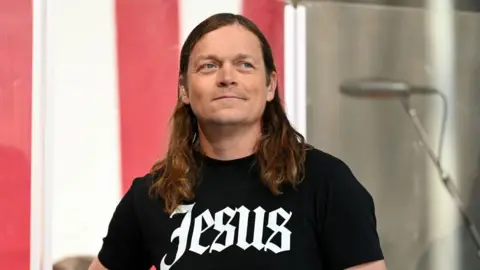
The high court unanimously ruled in the case of Gabriel Olivier, who claims his religious and free speech rights were violated when he was arrested for refusing to relocate his preaching away from a suburban amphitheater. The city described his behavior as shouting insults like “whores,” “Jezebel,” and “nasty” while brandishing signs showing aborted fetuses.
Olivier aimed to challenge the ordinance as an unconstitutional limitation on free speech, but lower courts barred him from pursuing the lawsuit because of his conviction for breaking the law. A past ruling from the Supreme Court stated that individuals cannot leverage civil lawsuits to challenge criminal convictions. However, the justices concluded that Olivier could still pursue his case because he is seeking to prevent future enforcement of the ordinance.
Justice Elena Kagan noted, “Given that Olivier asked for only a forward-looking remedy—an injunction stopping officials from enforcing the city ordinance in the future—his suit can proceed, notwithstanding his prior conviction.”
Olivier’s legal team insists that he was conducting a peaceful demonstration when he was detained for disobeying the directive to move to a designated “protest zone.” They believe this decision impacts free-speech cases across the political spectrum.
Kelly Shackelford, president and CEO of the conservative nonprofit First Liberty Institute, emphasized the significance of the ruling, stating, “This is not only a win for the right to share your faith in public, but also a win for every American’s right to have their day in court when their First Amendment rights are violated.”
The ruling enables Olivier to file a civil rights lawsuit, although it does not assure him victory. Local authorities warn that a favorable decision for Olivier could precipitate an influx of new lawsuits against municipalities.
City officials in Brandon maintain that the restrictions imposed on Olivier pertained to conduct rather than religion, contending that he had other legal avenues available to challenge the law. This ordinance, which confines Olivier to a specified protest zone, has previously withstood other legal challenges, according to city attorneys.