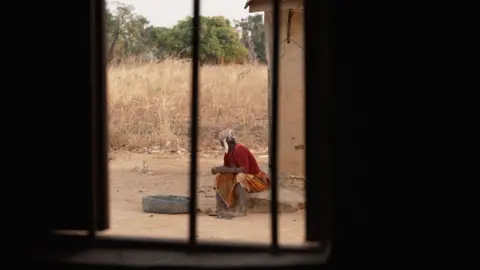
There was a huge plaster on Sarah Peter's head to staunch the bleeding caused by the blow of a gunman's weapon.
Sarah, not her real name, was in church in a village in northern Nigeria on Sunday morning when attackers raided the compound to abduct the worshippers and take them away on foot.
The 60-year-old was whacked on the skull with a rifle to encourage her to move.
Blood was all over, she said, her fingers brushing the area where the wound was.
I suffered, she added, clearly still traumatised by what happened three days earlier.
They kept dragging me even when I told them I couldn't walk. Then I hid somewhere until I couldn't see them any more. I was so weak I had to crawl back to the village.
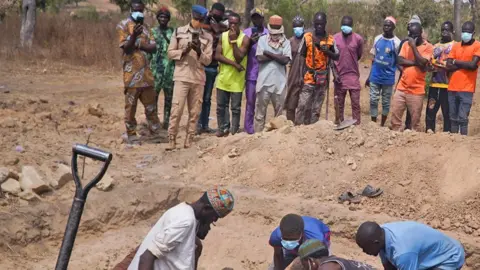
Dozens of others were taken away from her branch of the Cherubim and Seraphim Movement Church and two other churches in Kurmin Wali, a village 135km (84 miles) north of the capital, Abuja.
Although 11 people managed to escape, including Sarah, more than 160 people are still unaccounted for, according to the local branch of the Christian Association of Nigeria.
The remaining villagers have been left devastated and fear more attacks.
Authorities have not released any figures for those missing.
Kurmin Wali is near Kaduna state's Rijana forest, a hideout for armed gangs, known here as bandits, who have been carrying out raids and abductions in the region.
No group has claimed responsibility for Sunday’s raid, but it is part of a broader security crisis in Nigeria, where kidnappings for ransom are increasingly common.
Paying kidnappers is illegal in Nigeria but it is often suspected that money has been handed over to free those who have been abducted. In this case, no ransom demand has been reported.
Governor Uba Sani visited Kurmin Wali three days after the attack, pledging to enhance security measures, including establishing a military base nearby.
As Sarah and other villagers wait anxiously for news of their missing loved ones, the call for increased security and transparency remains urgent.