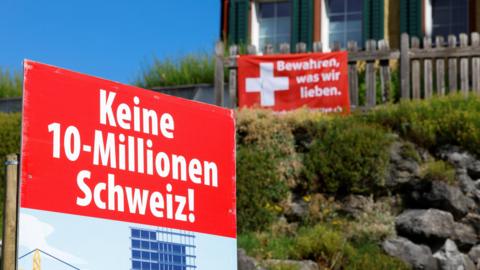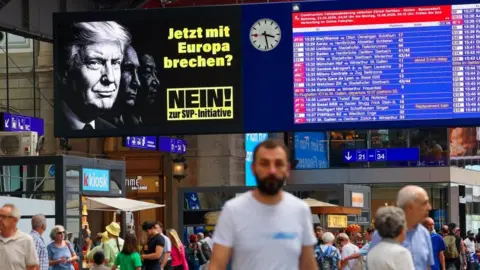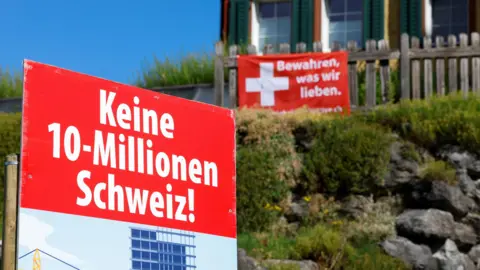
In a national referendum, Swiss voters have rejected the Swiss People’s Party’s proposal to limit the country’s population to 10 million. Current counting shows 55 % of participants voting against the cap, with 45 % in favour, indicating a clear but not overwhelming opposition to the plan.
The proposal, driven by the right‑wing Swiss People’s Party, was marketed as a way to reduce pressure on transport, housing and the environment by capping population growth. Critics argue that such a limit would restrict the mobility of immigrants essential to Switzerland’s tourism, healthcare, and care‑home sectors, and could undermine the country’s economic competitiveness.
Beyond domestic concerns, the vote carries significant implications for Switzerland’s free‑movement agreement with the European Union. If approved, the cap would have forced Switzerland to terminate that agreement, as more than half of Swiss goods are sold in the EU market and Swiss labour migration would be curtailed. Business leaders and many voters feared that the cap could isolate Switzerland in an unstable global context and jeopardise access to Europe’s single market.
Swiss voters also grapple with the question of national identity and demographic balance. While 27 % of the current population are Swiss residents born abroad, the country’s population has risen from 7.3 million in 2002 to 9.1 million today. The split in the referendum reflects tension between preserving cultural traditions and embracing a diverse, global workforce.
Swiss direct democracy means that major policy decisions are determined by ballot, and any national referendum is initiated after gathering 100,000 signatures. The recent turnout illustrates how policy proposals, whether aimed at controlling population or regulating immigration, must survive the crucible of public opinion. Read more about the Swiss People’s Party’s platform.
In the broader European context, Switzerland’s decision comes at a time when defence spending is rising and security cooperation with European neighbours is under discussion. The recent vote may influence how Switzerland navigates its policy path in a period marked by economic uncertainty and shifting geopolitical alliances.
For more on Swiss direct democracy and its implications for policy, see this overview.