In brief
The former Bosnian Serb commander Ratko Mladić, convicted of genocide, died while serving a life sentence. Thousands attended his burial in Belgrade, reflecting enduring nationalist reverence. European Union officials denounced the event as a glorification of a war criminal, while Serbian authorities maintained support for the ceremony. The funeral stirred divergent emotions: some mourned his legacy of nationalist pride, while victims recalled the suffering caused by his forces.
The former Bosnian Serb commander Ratko Mladić, who received a life sentence in 2021 after trials for genocide and crimes against humanity, died at the age of 84 while serving his term in The Hague.
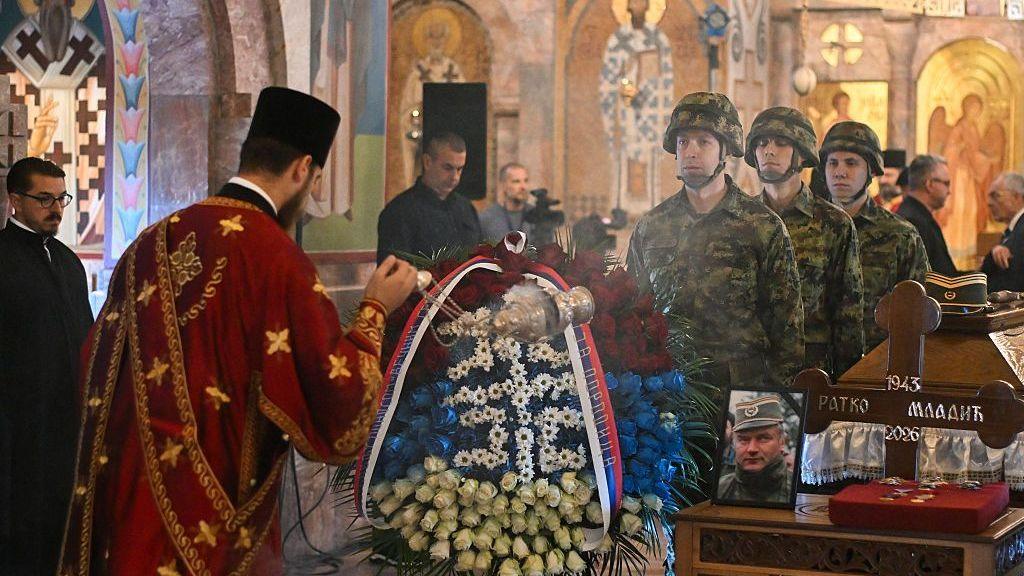
In Belgrade, then Serbia’s capital, an estimated thousands turned out to attend his funeral at St. Luke church. Many of the mourners were veterans, men draped in flags bearing Mladić’s picture, and supporters who consider him a defender of Serbian interests.
Serbian officials, including Defence Minister Bratislav Gašić and Justice Minister Nenad Vujić, joined the crowds to pay tribute, while the head of the Serbian Orthodox Church, Patriarch Porfirije, led the funeral service, stating that Mladić’s legacy would stay “etched in the memory and prayers” of the majority of Serbian Orthodox people.
Conversely, the European Union released a statement condemning the funeral as a “glorification of war criminals, genocide denial and revisionism,” affirming that such actions conflict with fundamental European values. The EU’s response followed earlier opposition from European leaders to the idea of a state funeral for Mladić.
Parallel to the Serbian pageant, victims’ narratives echo deep wounds. A woman from Sarajevo, whose nine‑year‑old son was killed during the siege of Sarajevo in 1992, described the funeral as “really horrible,” insisting that Mladić should be remembered only as a “butcher.”
Reports suggest that the coffin was flown back to Serbia on a government plane the week before the funeral, guarded by veterans, and that free bus services were arranged from Bosnia and across Serbia to accommodate those wishing to attend.
The event also intersected with sports culture: Red Star Belgrade supporters had displayed a tifo featuring Mladić during a recent league match, a visible sign of the continued reverence within certain segments of Serbian society.
For observers, the funeral highlighted the challenges post‑conflict societies face when reconciling national pride with the imperative of historical accountability and seeking justice for victims.