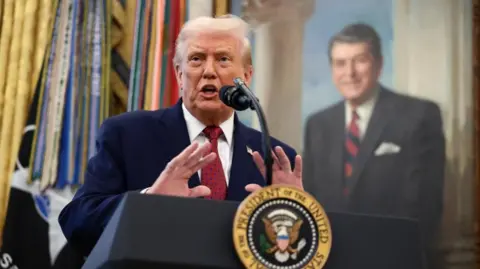
WASHINGTON (AP) — The Trump administration announced on Monday the suspension of leases for five significant offshore wind projects under construction on the East Coast. This decision was made due to unspecified national security risks identified by the Pentagon.
The pause is effective immediately, allowing the Interior Department time to collaborate with the Defense Department and other government agencies to evaluate measures that could mitigate the security vulnerabilities associated with these wind energy projects, as stated by the administration.
Interior Secretary Doug Burgum emphasized the government's responsibility to protect American citizens with a statement: Today’s action addresses emerging national security risks, including the rapid evolution of adversary technologies, and the vulnerabilities created by large-scale offshore wind projects near densely populated areas on the East Coast.
The affected projects include Vineyard Wind in Massachusetts, Revolution Wind in Rhode Island and Connecticut, Coastal Virginia Offshore Wind, Sunrise Wind, and Empire Wind in New York.
Concerns have been raised by the Interior Department that the massive turbine blades and reflective towers associated with offshore wind projects may create radar interference known as clutter. This interference can obscure legitimate moving targets, generating false targets in the vicinity of these developments.
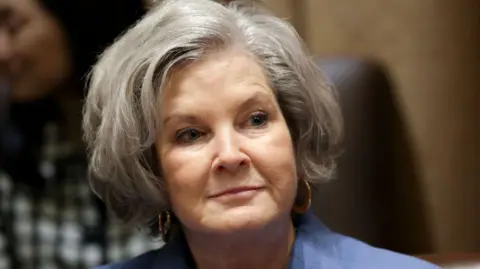
This action follows a recent federal court ruling that struck down Trump’s executive order aimed at halting wind energy projects, labeling the attempt as arbitrary and capricious and a violation of U.S. law. The ruling, delivered by Judge Patti Saris of the U.S. District Court for Massachusetts, favored a coalition of state attorneys general from 17 states, led by New York Attorney General Letitia James, who challenged the legality of Trump’s order that paused wind energy leasing and permitting.
Historically, Trump has been resistant to renewable energy initiatives, particularly offshore wind projects, favoring fossil fuel alternatives for electricity production.