In brief
The Venezuelan government has initiated the release of political prisoners, including notable human rights activists, in a gesture perceived as goodwill. This decision follows increased international pressure, particularly from the U.S., after a recent raid involving President Nicolás Maduro. Experts view this move as part of a broader strategy for national unity and potential diplomatic engagement.
The Venezuelan government has started releasing detainees considered political prisoners by human rights groups, in what officials described as a goodwill gesture.
Spain's foreign ministry confirmed that five of its nationals had been released, including prominent Venezuelan-Spanish rights activist, Rocío San Miguel.
The move comes after a raid in Caracas that involved the U.S. capturing President Nicolás Maduro, leading to significant international attention and pressure on the Venezuelan government.
U.S. President Donald Trump remarked that the release of political prisoners—a long-standing demand of the U.S.—was 'a very important and smart gesture' from Venezuela, linking it to an easing of tensions between the two countries.
Jorge Rodríguez, head of Venezuela's National Assembly, announced on state television that 'a significant number' of prisoners would be released immediately, although specific details on identities or numbers remained vague.
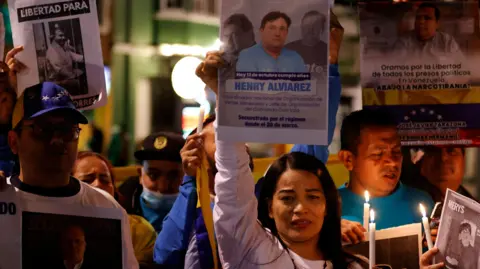
Human rights advocacy groups and observers welcomed the development with cautious optimism. They recognize the longstanding issue of political detentions in Venezuela, a country facing dire human rights critiques.
Rocío San Miguel's release, who had faced serious charges including treason, marked a notable moment, as she had been one of the more visible advocates for human rights in the country.
The announcement also comes amid discussions related to the closure of notorious prisons such as El Helicoide, where many political prisoners were allegedly subjected to severe mistreatment.
Opposition leaders, like Nobel Peace Prize winner Maria Corina Machado, have long called for the release of political detainees, asserting that such actions are essential for restoring democracy in Venezuela.
As Venezuela navigates this complex landscape of political reforms and international pressures, the recent release of prisoners indicates a willingness from the Maduro administration to engage with broader calls for change.