In brief
Washington D.C.'s cherry blossoms are in full bloom, signaling the start of the spring season and drawing millions of visitors despite ongoing construction work around the Tidal Basin. The National Park Service defines peak bloom as when 70% of the Yoshino Cherry blossoms are open. This year, renovations to the basin pose accessibility challenges due to safety work and tree replacements. The National Cherry Blossom Festival runs from March 20 to April 12, showcasing concerts and cultural events.
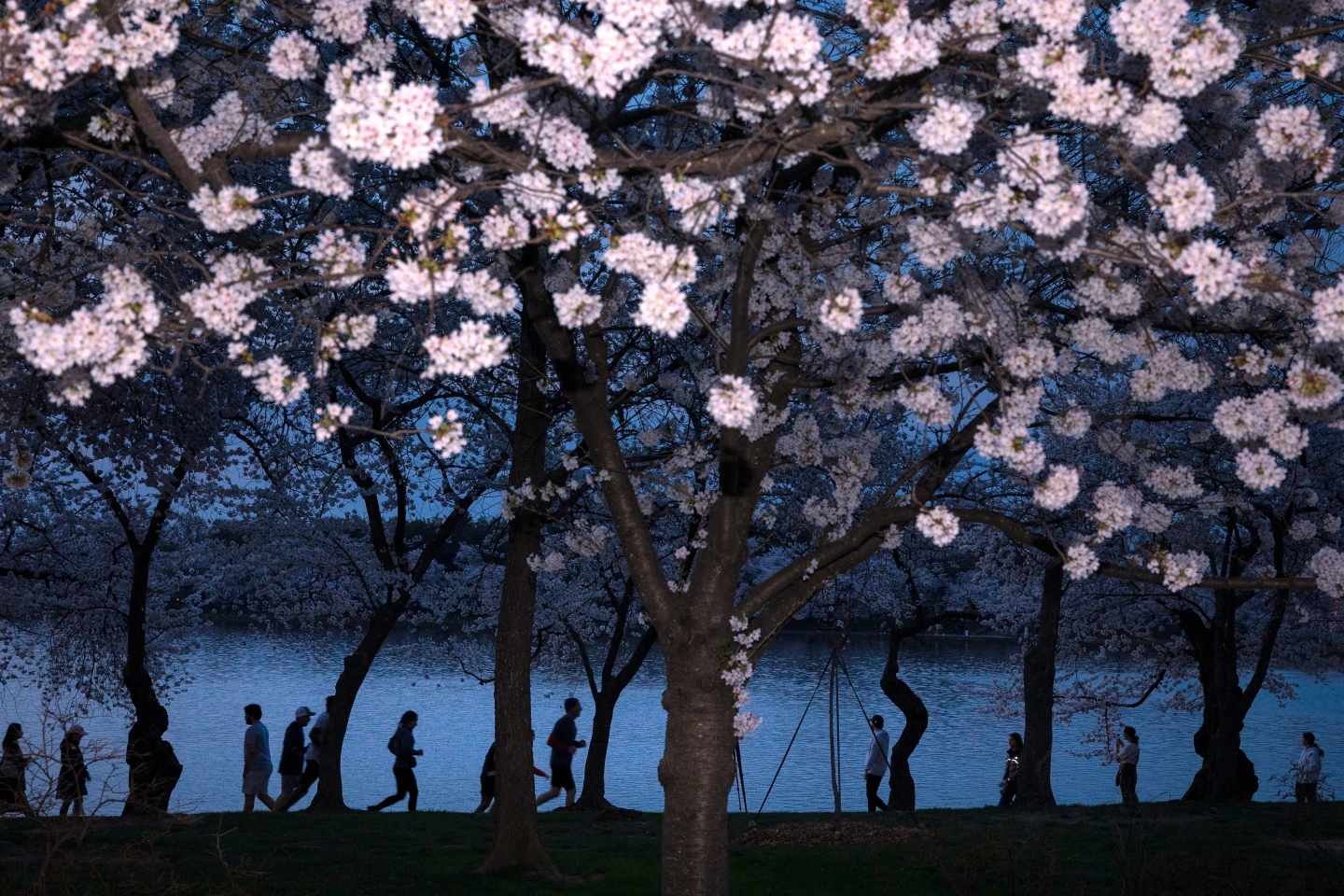
It’s finally peak bloom for the airy pink cherry blossoms in Washington, a welcome sign of spring in a city of concrete and granite continuously weighed down by the necessary heft of the nation’s decision-making.
The thousands of blooming cherry trees that adorn the nation’s capital have burst into ephemeral blossoms, marking the unofficial beginning of Washington’s tourist season. This fleeting window, however, is at the mercy of weather shifts, making it crucial for visitors to get out and enjoy the blooms quickly.
According to the National Park Service, peak bloom is defined as the day on which 70% of the Yoshino Cherry blossoms are open. This year, it came right on schedule, typically occurring between the last week of March and the first week of April.
In addition to the blooming trees, the four-week National Cherry Blossom Festival started on March 20, featuring numerous events, including musical performances and Japanese cultural activities.
While many enjoy the spectacle, renovations at the Tidal Basin, essential for preserving the cherry trees, restrict access to certain areas, as over 100 trees will be replanted to accommodate repairs and future growth.
Even with these limitations, the enduring beauty of the cherry blossoms continues to attract local and international visitors, ensuring that this tradition remains a key highlight of the Washington D.C. spring experience.
For those looking to see Washington's cherry blossoms, preparations for future blooms are already in progress. As part of ongoing efforts, the Japanese government has contributed additional trees, and festivities remain a touchstone for cultural diplomacy.