In brief
Israeli forces blew up the homes of two Palestinians suspected of a recent attack on soldiers, marking the eighth day of a military operation that has displaced hundreds. Xinhua presents the demolition as a proactive measure to protect residents, while Al Jazeera frames it as collective punishment amid a broader siege that has seen widespread detentions and business closures.
Israeli forces blew up the homes of two Palestinians in Hebron on Friday, a day that marked the eighth of a military operation that has displaced hundreds of families in the southern West Bank, according to Xinhua. Al Jazeera reports the same demolitions but casts them as part of an extensive siege, citing large numbers of detentions and business closures.
Xinhua's account
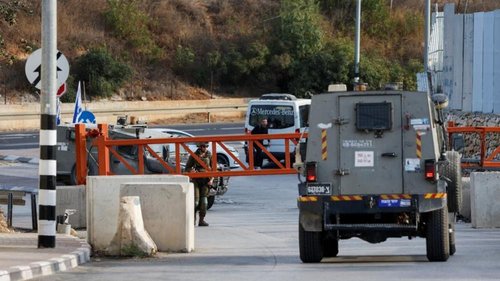
“Israeli forces blew up the homes of two Palestinians accused of killing two Israeli soldiers in the southern West Bank city of Hebron, as a military operation entered its eighth day and displaced hundreds of families,” the Chinese state news agency reported. The two individuals, Hamoudeh and Ahmed al‑Jaabari, were killed by Israeli forces after the agency said they carried out an attack on October 23 near the Farsh al‑Hawa checkpoint, which killed two Israeli soldiers and wounded three others. Palestinian security sources said Israeli reinforcements were deployed to the Deir Baha area west of Hebron, where engineering units raided the home of Hamoudeh al‑Jaabari and carried out demolition work, forcing more families to leave.
The Israeli military confirmed the demolitions, stating in a statement that it would “continue to operate proactively and offensively” to thwart attacks in the West Bank and “protect residents in the area.”
The Hebron Governorate Emergency Committee said, on Thursday, that 537 families, comprising 3,361 people, had been displaced from the al‑Jilda and Deir Baha neighborhoods since the operation began. The agency also noted that Israeli forces launched the operation in Hebron hours after the shooting attack, vowing to displace residents and carry out demolitions.
Al Jazeera's account
In a report on the same day, Al Jazeera described the demolitions as a form of collective punishment amid a wider siege. The network reported that Israeli forces destroyed the houses of brothers Ahmad and Hammouda al‑Jaabeh—spelled slightly differently in the source—after surrounding the buildings since the morning and sealing off the area. According to Al Jazeera’s Mohammed al‑Atrash, army engineers spent at least nine hours inside the homes rigging explosives before detonating them. He added that when residents tried to approach the site afterward, large numbers of troops backed by drones moved in and detained at least 12 Palestinians.
“Some of these Palestinians are still being detained up to this moment and we monitored live on air their abuse at the hands of the Israeli occupation army,”Al‑Atrash said. He further observed that Israeli forces had fully emptied the Ein Deir Bahha neighbourhood of its residents and that some homes “have been turned into military barracks” and command centres. Hundreds of families in the neighbouring al‑Jalda area remain trapped in their homes.
Al Jazeera reported that the Hebron municipality said on Tuesday that 4,969 Palestinians from 780 families had been displaced by the offensive. Al‑Atrash claimed Israeli forces had arrested at least 120 Palestinians since the operation began and interrogated hundreds more. He also noted that at least 13 businesses near the checkpoint had been demolished, and that Israeli officials had threatened to speed up demolitions in Area C, the part of the West Bank under full Israeli control, in line with measures approved by Finance Minister Bezalel Smotrich after the attack.
Protesting near the closed al‑Jalda roundabout, dozens of displaced residents—including women, children and older people—demanded an end to the siege and the right to return home. Raed Nairat, an academic and expert on Israeli affairs speaking from Nablus, told Al Jazeera that the operation’s message had been clear “from day one.” “It is effectively collective punishment, with the aim of breaking the Palestinians’ will and making him pay a price he cannot bear, as a result of an act he may not have been consulted about and may not be content with,” he said.
Both outlets confirm that the demolitions targeted the homes of two Palestinians linked to an attack that killed Israeli soldiers, but each frames the broader context differently. Xinhua stresses the operation’s focus on protecting residents and thwarting attacks, while Al Jazeera emphasizes the siege’s impact on civilians, the scale of detentions, and the use of forceive demolitions as a punitive strategy.