
In brief
In a significant political upheaval, the military in Guinea-Bissau has ousted President Umaro Sissoco Embaló, leading to widespread skepticism from regional leaders who label the coup a 'sham.' Senegal's Prime Minister Ousmane Sonko and Nigeria's former President Goodluck Jonathan have publicly expressed doubts about the authenticity of the military's claims. As the new transitional government establishes itself, international bodies like the African Union have suspended Guinea-Bissau, calling for a return to democratic processes amidst concerns from the local populace over potential chaos and instability.
In a dramatic twist to Guinea-Bissau's evolving political landscape, the military's recent ousting of President Umaro Sissoco Embaló has sparked extensive debate among regional leaders, many of whom label the coup a 'sham.'
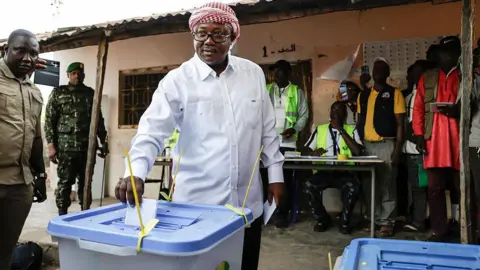
Senegal's Prime Minister Ousmane Sonko and former Nigerian President Goodluck Jonathan have both raised questions about the military's motives, insisting that the legitimacy of the coup is deeply flawed. Their skepticism comes as the military announced the suspension of the electoral process just before the results were to be released following a tense presidential election.
The military alleges they acted to prevent a plot purportedly supported by a drug baron aimed at destabilizing the country. However, Sonko and Jonathan emphasized the importance of transparency, calling for the release of election results without offering concrete evidence of their claims.
After being deposed, Embaló was flown to Senegal, stating publicly that he had been removed from power in a manner unprecedented in Guinea-Bissau's tumultuous political history. Jonathan likened the event to a 'ceremonial coup,' highlighting the unusual aspect of Embaló himself promptly announcing his ousting.
The political situation has drawn the attentions of international organizations, with both the African Union and ECOWAS suspending Guinea-Bissau's membership as a show of disapproval against the military's actions. Locally, reactions have been divided; while some citizens express relief and hope for a more stable government, others fear the consequences of military rule.
As new Prime Minister Ilidio Vieira Té assumes office, the nation, plagued by historical cycles of coups and drug trafficking, continues to grapple with a populace divided over military authority and the prospect of imminent democracy.
