In brief
As Putin seeks stronger ties with non-Western leaders, Turkey's position raises questions about alliances and global power dynamics.
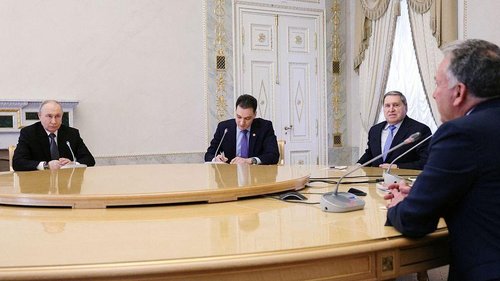
In a significant display of diplomacy, President Vladimir V. Putin of Russia hosted leaders from various countries during the BRICS summit in Kazan, emphasizing his desire to counter Western influence. Among these leaders was Turkish President Recep Tayyip Erdogan, the lone representative from NATO attending the summit. Erdogan's longstanding rapport with Putin, marked by referential terms such as "dear friend," reflects Turkey’s evolving foreign policy as it seeks to assert itself in a multipolar world, often to the vexation of its NATO allies. Putin’s reception of Erdogan served as a crucial signal in his effort to re-establish Russia's standing in the international arena, following the isolation imposed by the West due to the ongoing Ukraine conflict. The Russian leader proclaimed that a shift towards a "multipolar world order" is in progress, suggesting that regions like BRICS, comprising Brazil, Russia, India, China, and South Africa, are gaining prominence. Erdogan's participation not only bolstered Putin’s narrative of rejuvenation on the global stage but also highlighted potential fractures within NATO, as member nations navigate their individual interests amidst rising geopolitical tensions. Analysts interpret Erdogan's engagement with BRICS as indicative of Turkey's strategy to navigate a world with competing power structures, merging its historical ties with the West alongside a budding alignment with non-Western allies, which could reshape regional and international dynamics.