In brief
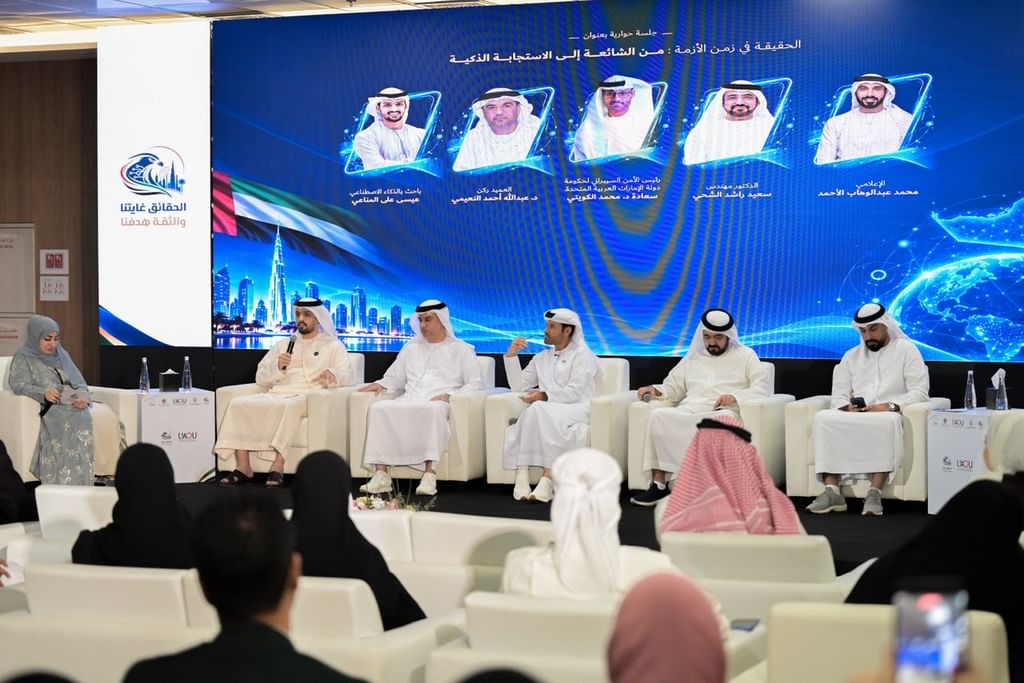
In the early hours of November 7, 2026, a group of Umm Al Qaiwain University students convened a forum titled “Truth in Times of Crisis” to explore the role of smart technologies against misinformation. Representatives from government cyber units, police, media and a research group shared insights on detection, verification and community resilience. The discussion highlighted both the promise and pitfalls of AI‑driven tools in urgent information environments.
Umm Al Qaiwain University students, as part of their graduation project, organized a dialogue session in Abu Dhabi on the evening of November 6 – 7, 2026, inviting experts from cybersecurity, policing, artificial intelligence (AI) and media to examine how smart technologies can help curb misinformation during crises. The forum, titled “Truth in Times of Crisis: From Rumor to Smart Response,” aimed to map out the challenges of rapid rumor spread and to chart a path for verification culture amid fast‑moving events.
The attendees represented a cross‑section of authorities and specialists. Mohamed Hamad Al Kuwaiti, head of the UAE Government’s Cybersecurity Department, spoke on the national cyber‑defense stance. Brigadier‑General Abdullah bin Salman Al Nuaimi, deputy director of operations at the Ras Al Khaimah Police General Command, outlined law‑enforcement strategies. Media professional Mohammed Al Ahmad offered a journalistic perspective on the importance of reliable sources. Saeed Rashid Al Shehhi added insights from communications, while Isa Al Manaei, a TRENDS researcher, led the technical portion.
Al Manaei highlighted the evolution of AI systems, noting that today’s intelligent agents can search across multiple networks, produce textual content, generate images and videos, and undertake complex analytical tasks with a substantial degree of autonomy. He pointed out that this expanded capability, while boosting efficiency for journalists and decision‑makers, also raises the stakes by making high‑quality misinformation easier to produce and distribute.
During his presentation, he remarked:
"These systems present significant opportunities to accelerate work, improve analytical efficiency, and support decision‑makers, journalists, and researchers, while simultaneously increasing information‑related challenges because realistic digital content is easier and less costly to produce."
Al Manaei stressed that the real danger lies not only in the ease of creating deceptive content but also in the speed that it can reach audiences. He explained that during a crisis, the thirst for information can outpace the public’s ability to verify, allowing rumors to spread globally in minutes before official or media corrections can be issued.
Al Kuwaiti confirmed that the UAE government is actively integrating AI‑driven detection tools into its cyber‑security posture. He added that these tools must operate under a framework of human oversight to ensure accuracy and prevent erroneous flagging of legitimate information.
Brigadier‑General Al Nuaimi underscored the police force’s role in countering online misinformation, especially when it fuels unrest. He described partnership efforts with technical firms to monitor real‑time social media chatter and to deploy rapid‑response teams that can quickly fact‑check emerging stories.
Mohammed Al Ahmad noted that media outlets need to adopt verification protocols as a standard practice. He advocated for community‑based fact‑checking hubs that can crowd‑source verification work, thereby distributing the load and increasing trust in reliable outlets.
Saheed Rashid Al Shehhi concluded that institutional responsibility requires both policy support and public education. He called for curricula that teach critical media literacy and for collaboration between academia, industry, and regulators to foster a resilient information ecosystem.
Overall, the forum underscored that smart technologies can be potent allies against misinformation during crises, but their effectiveness hinges on coordinated governance, transparent processes, and a culture of verification among society at large.