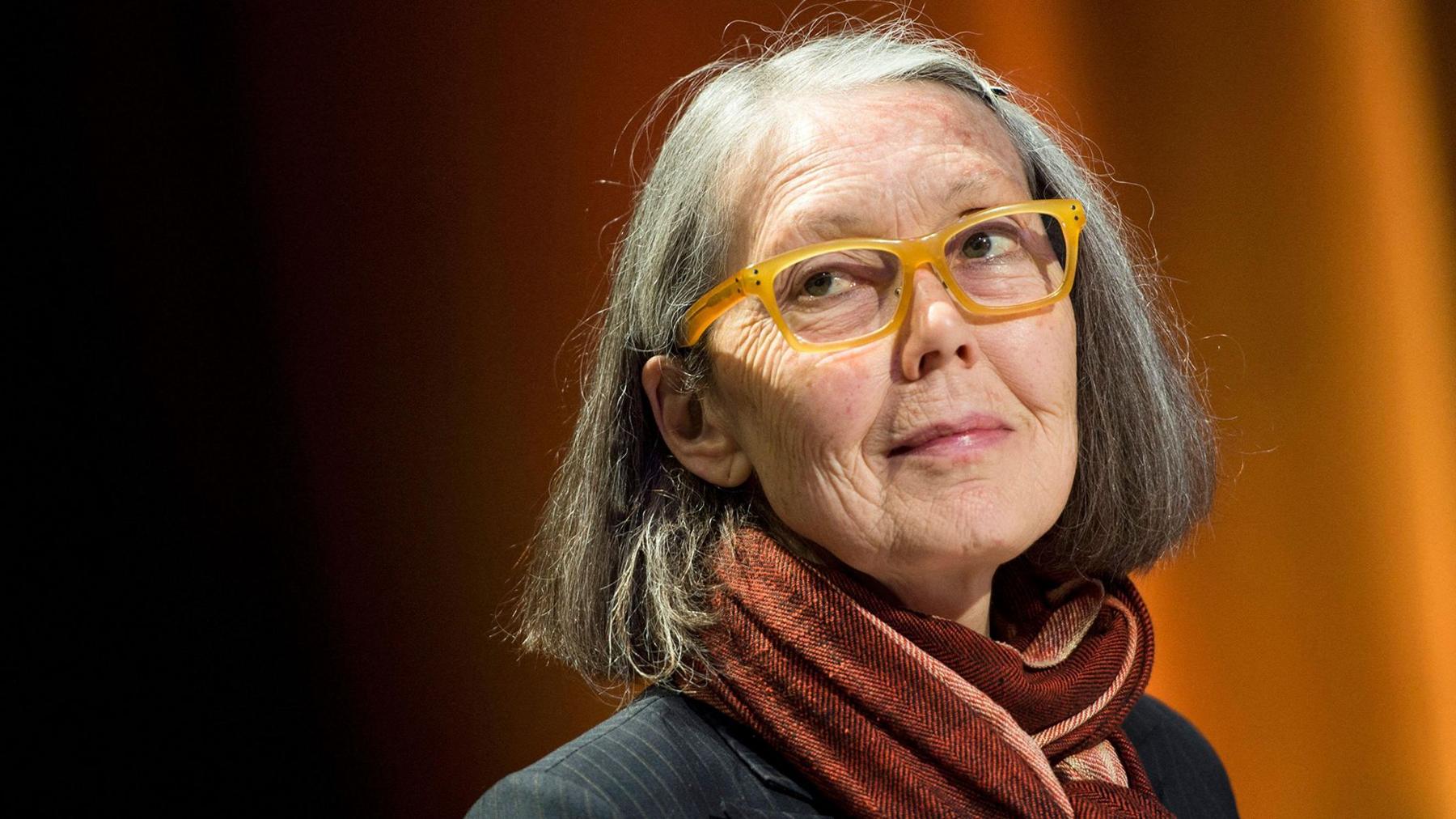
Canadian poet, essayist and translator Anne Carson has been awarded this year’s Nobel Prize in Literature. The prize, one of the most prestigious awards in global literature, is given for a lifetime’s body of work and carries a reward of 12 million Swedish kronor (£900 000, $1.2 million).
Carson, 76, is celebrated for works that often cross the boundaries between poetry, fiction and scholarship, drawing from classical texts and folk traditions to create new literary forms. The Swedish Academy’s decision was phrased as a recognition of her “bold and inventive oeuvre that, in playful dialogue with the classical tradition, has created new forms for contemporary literature.”
The poet welcomed the news with trademark humour, telling public broadcaster RUV in Iceland that the judges were “crazy” – a comment that has ignited social media chatter across the globe, from Canada’s literary circles to Icelandic literary cafés.
In the weeks leading up to the announcement, Canadian Prime Minister Mark Carney described Carson’s win as an “extraordinary achievement and a proud moment for Canada,” noting how her work “has brought ancient stories to new audiences and transformed the way we think about literature.” Dr. Anders Olsson, chairman of the Swedish Academy’s Nobel committee for Literature, added that Carson’s work has “broken away from lyrical poetry bound to the narrative self” and has inspired new inter‑genre possibilities.
Carson’s career spans more than three decades, during which she has taught classics, written translated dramas, and introduced Shakespeare to digital audiences. Her notable works include The Glass Essay, Autobiography of Red: A Novel in Verse, Nox, Float, and The Beauty of the Husband: A Fictional Essay in 29 Tangos. She also ventured into performance with Norma Jeane Baker of Troy, linking Helen of Troy to Marilyn Monroe.
Carson’s multiple accomplishments illustrate why international media have hailed her as a cultural bridge: she is a translator who re‑imagines Greek classics for contemporary readers, a collaborator with visual artists, choreographers and theatre directors, and an advocate for freely exploring literary conventions. The Swedish Academy’s commentary – “It is this that lies behind the outstanding importance her work has had for the international art and literature scene” – captures the global resonance of her practice.
Beyond the academic and literary communities, the Nobel award sparks broader conversations. In Canada, several provinces have pledged to fund scholarships for under‑represented voices in the arts, citing Carson as a role model. In Iceland, where Carson now resides, journalists report heightened interest in classical adaptations, and a local university is planning a master’s program dedicated to ancient texts in contemporary forms.
Internationally, cultural commentators in Europe and Asia are analysing how Carson’s blend of tradition and modernity may influence emerging writers who juggle serial media with literary fidelity. The award also strengthens debates about cultural ownership and the role of translation, prompting critics to reassess whose narratives are being reshaped for global audiences.
As literary communities across continents mark the moment, Anne Carson’s Nobel Prize serves as a reminder that literature is a living, evolving conversation, and that the most sustained impact comes when artists cross genres, cultures, and centuries to create new forms that resonate with contemporary readers worldwide.