In the Sundarbans, known for its devastating child drowning statistics, where nearly three young lives are lost to water incidents every day, a group of dedicated mothers is stepping up efforts to combat this tragic phenomenon. These women engage in collective acts of care, advocating for preventative measures in their communities, while the specter of loss haunts them.
Mangala Pradhan recalls the agonizing day she lost her one-year-old son, Ajit, to drowning. Tragedy struck when her young son wandered off unnoticed and fell into the family pond, a common feature in this riverine region, used for various daily tasks from bathing to drinking. Today, she is part of a group of 16 mothers who work in makeshift creches established by the non-profit Child In Need Institute (CINI), caring for about 40 children whose parents must venture off to work.
The need for such initiatives is pressing, with a bleak 2020 survey revealing that drowning incidents peak during monsoon months, particularly between late morning and early afternoon. During this time, caregivers are often preoccupied, leaving children unsupervised near water sources. Alarmingly, nearly 65% of these drownings occur within just 50 meters of homes, and healthcare facilities are scarce.
Despite traditional practices that focus on superstitious rituals for protecting children from drowning, 2000 villagers have undergone CPR training initiatives in recent years to better respond to emergencies. Parents like Sujata Das, who lost her 18-month-old daughter Ambika under tragic circumstances, are now determined to take action by fencing their ponds and teaching neighbor children how to swim.
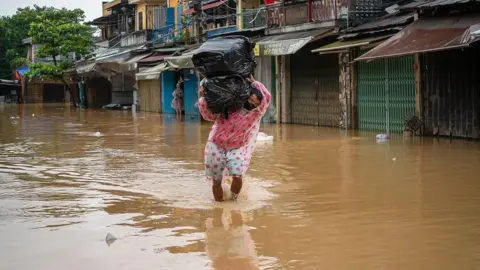
Alongside these practical measures, the challenge lies within ingrained cultural beliefs that complicate safety efforts. While neighbouring Bangladesh has seen considerable success with creche programs reducing child drowning rates, compliance and community engagement remain hurdles in the Sundarbans. The reality is compounded by the threat of climate change, causing unpredictable flooding in a landscape where children’s lives are already precarious.
Experts underscore the need for political engagement and comprehensive safety programs to address the dire situation more effectively. As calls for action grow louder, mothers like Kakoli Das, who lost her six-year-old son Ishan, share heartfelt pleas to prioritize child safety and forge community resilience.
With mothers taking the helm of change, these creches symbolize a glimmer of hope in Sundarbans—a place where community solidarity and decisive action can save young lives, teaching generations the vital skills needed to navigate a water-rich, perilous environment.