
In brief
The Strait of Hormuz remains a critical chokepoint for global oil transport amidst ongoing tensions between the US-Israel alliance and Iran, exacerbated by recent hostilities. Despite a two-week ceasefire that aims to assure safe passage for vessels, maritime traffic has significantly declined, with just three tankers crossing under the new arrangement. Analysts express skepticism regarding the feasibility of safe passage, caught between potential Iranian tolls and the risks of unauthorized entry. The economic ramifications are substantial, prompting rising energy costs and shipping uncertainties in the region.
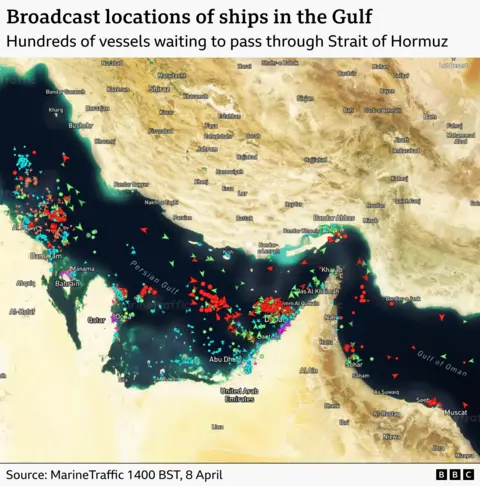
The Strait of Hormuz has become a focal point of the US-Israel war with Iran after Tehran effectively choked off one of the world's most important shipping lanes, carrying about a fifth of the world's oil and liquefied natural gas.A two-week ceasefire was agreed on Tuesday evening on the condition that safe passage through the strait is guaranteed - but recent analysis shows only a few vessels have since crossed.The disruption over the past five weeks has sent shock waves across the world economy, heightening energy prices and revealing the dependence of international supply chains on the strait, which measures about 33km (21 miles) wide at its narrowest point.The Gulf region is critical for transporting not only energy but also essential chemicals needed for microchips, pharmaceuticals, and fertilizers.Despite news of the ceasefire leading to a drop in oil prices, shipping analysts predict only limited vessel crossings in the near future. Lars Jensen from Vespucci Maritime expressed concerns, stating that most shipping lines are awaiting reassurances regarding transit details that remain unclear.Since the ceasefire commenced, it has come to light that Iran’s navy has issued warnings to vessels seeking to cross without permission, threatening that any such attempts will be met with force.By 14:00 BST on April 8, only three vessels, namely NJ Earth, Daytona Beach, and Hai Long 1, had successfully transited the strait post-ceasefire, a stark contrast to the pre-conflict daily average of 138 ships.Analysts emphasize that the reopening of key trade corridors will take time and may not reflect a straightforward transition to normal operations.Additionally, concerns loom regarding sea mines and the possibility of having to pay tolls to Iran for safe passage, a complex situation given existing sanctions against Iran.As shipping risks mount and tensions persist, market responses reflect cautious optimism, with oil prices showing slight decreases but no indication of a swift return to normal operations.


