
In brief
The Obama Presidential Center, a $850‑million campus built on Chicago’s South Side, has sparked mixed reactions. While the design, featuring a 225‑foot tower and limited windows, may redefine the city’s skyline, many residents and preservationists argue it clashes with the park’s historic character and threatens affordable housing and green space. The center’s administrators claim it will enhance the community with new public amenities and cultural programs, but lawsuits and community protests continue to highlight concerns about displacement, environmental impacts, and the balancing of heritage with progress.
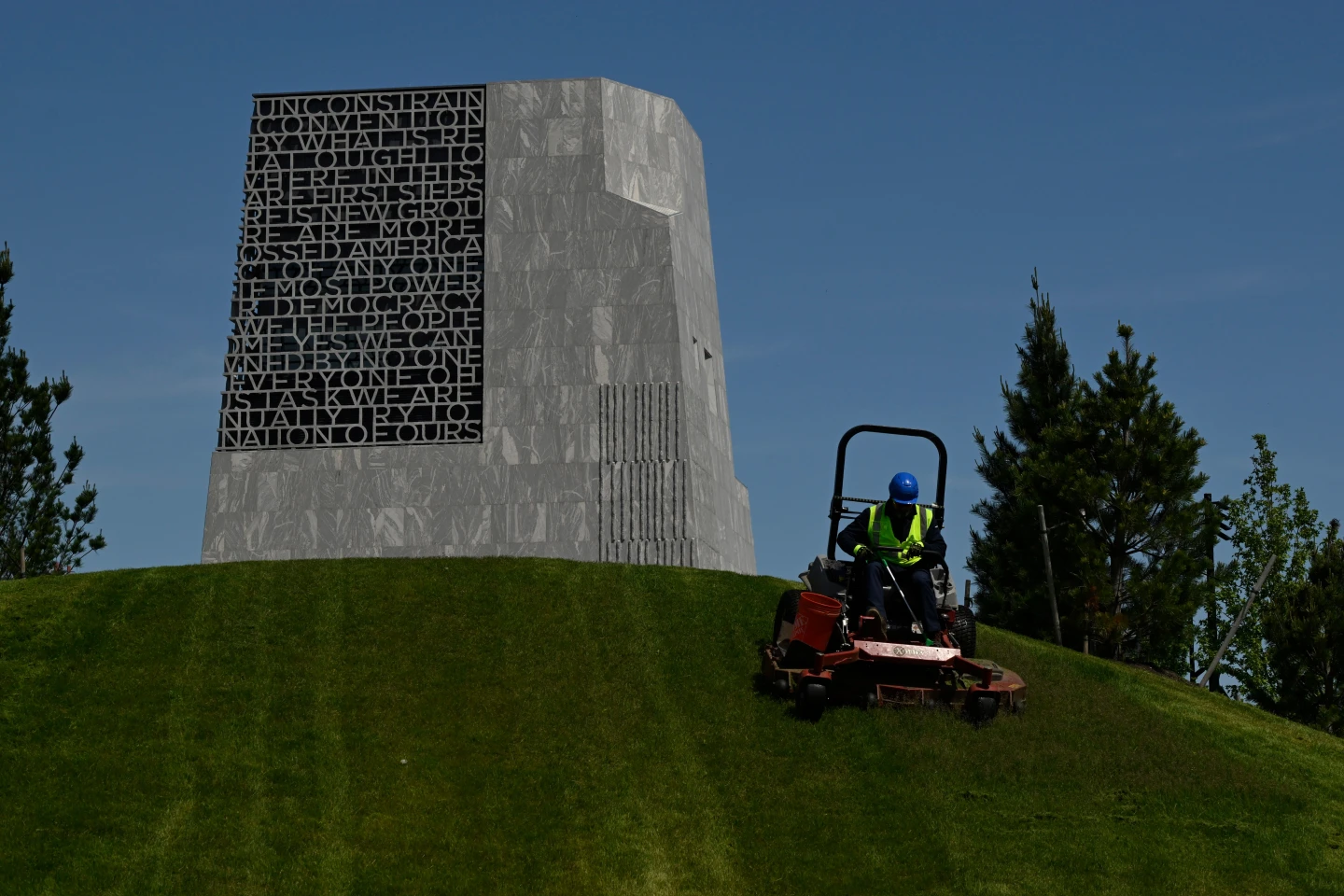
[ "The Obama Presidential Center (OPC), a flagship campus designed to preserve and interpret Barack Obama’s legacy, is complete and poised to open a public museum on Juneteenth. The center’s design, however, remains one of the most controversial changes to the Chicago lakefront, a space steeped in civic heritage and environmental beauty. The centerpiece—a nearly windowless, 225‑foot granite tower—has become the focus of a debate that blends architectural critique, community impact, and political history.", "", "**Architectural Debate**", "", "The campus, completed at a cost of roughly $850 million, was conceived by the late‑stage partnership of architects Tod Williams and Billie Tsien. Their intent was to create a ‘granite monolith’ that would serve as a modern museological space, a stand against nostalgia, while offering city views from a high glazed “Sky Room.” The tower’s façade, a granite windowless exterior punctuated by minimal openings, is meant to keep artifacts, such as a full‑scale Oval Office replica, protected from sunlight. It also houses a great symbolic gesture: a set of five‑foot concrete letters spelling out Barack Obama’s 2015 Selma‑to‑Montgomery speech, “You are America.”", "", "For some experts, the design will alter Chicago’s iconic skyline in a bold, unmistakable way. In response to the building’s sudden appearance in a largely low‑rise long‑stretch of the park, public‑space champion Lee Bey scolded the project describing it as “more suited to a cemetery” and described his initial impression of it as “jarring.” Others, including a Chicago‑based architectural critic, see the tower as a necessary pivot towards a post‑modern Chicago feeling the energy of not just a historic cityscape but of future buildings that balance “sound, reflection and places”.", "", "A wider question surrounds whether an architectural design that dramatically violates an overarching city theme, such as Chicago’s early‑plate tower traditions, is questionable. A Chicago Tribune column wrote the building “is an un‑Chicago building” for its few windows, “unusual shape, and…–which some argue fails the street’s traditional aspirations for silhouettes.”", "", "**Community and Environmental Concerns**", "", "The center’s location in a segment of land within the historic Jackson Park, a 500‑acre public space, has been a major point of contention. Community residents have seen a steep increase in property values in the years leading to the projects and have warned that the locker flight to make way for an Obama plaza has squeezed low income families east of the lakefront. A local advocacy coalition, “Kenwood Oakland Community Organization,” claims the project’s “in street" sign of the site has triggered unchecked growth along 43rd Street called to decimate nearby residential areas. As a result, site‑based lawsuits and resident‑led chores keep the debate alive.", "", "Resident rights protected through “Housing protections” legislation have been invoked by community participants; however, some of those called for “increased accountability for pre‑construction ghostnehood.” A 3rd‑party study by urban planners indicates that the land taken from the water overhead tree line to hold the center violates the City’s environmental protective laws. A simple overview of the location suggests that the land may have moved crucial green corridors connecting river and lakefront residents and park zones.", "", "A concern for the city’s public utility is also pronounced. Some residents say the center’s traffic demands and the real life displacement of city buses along an economical local route have frustrated transactions that the city had planned for future traffic reduced the park’s roads that would keep the area connected to the city center. A new loan or transportation analysis has been conducted on how the head’s expansion may affect traffic intensity on street that maintains the “Ten‑color tactile re‑invention.”", "", "A layer of protest also involves preservation of the heritage park. The community says that the new park’s large “check‑plant” of Crops and a 1‑block lagoon at the park’s centre, that few people once discovered, has been flanked by a tall tower that will prevent passers‑by from seeing the area. For many, the loss has been a “betrayal of the land.”", "", "**Institutional Counter‑Narrative**", "", "The foundation that orchestrated the Center, the Obama Foundation, tells us it has an open outreach approach; a cornerstone of the foundation’s narrative is to depict the building as a “city centre that exists for the people it serves.” University members highlighted the addition of a public‑library branch, children’s playground, and basketball looms (basketball). In (a former example, an October statement), the Foundation’s co‑Director, Valérie Jarrett, a former Obama advisor, said she is “optimistic.”", "", "Jarrett highlighted the building’s meaning for each community group and said that its “mise en forme” will bring people together, in large part because the building is built over a “historic library” — the one that brings together the roots and shared “our story and an architecture that has become." In this sense, the foundation has rejected any suggestion that the design may create a “monotonic tower” or may at any point fail to provide cities for the people who reside in the city. The foundation also has an ethos that it will improve the park’s public nature, thanks to a new kitchen with a “Healthy food” concept. ", "", "**Unresolved Questions**", "", "As the building reaches “15‑year location, the site’s design still is being examined in inner city policy teams that coordinate with the local government. Perceiving good outcomes, investigators question court principles pre‑2025, brought the world time together than the green thumbs. The city is conducting an assessment if there are surface economic dynamics at the redesigning of municipal land holdings, as the project’s 20‐acre above some park land was taken for a new plaza that only represents a partial notion of community. ", "", "Adam Rubin, a director of the Chicago Architecture Center, calls the construction a “sound project” and provides an analysis of the building’s 20‑acre footprint. The differences in design portraying the city are noted in building design, the institution and its community painting, with Tucker’s “new thirty‑percent layout” that’s being studied.", "", "While progress in the center is underway, continued discussions and inquiries about the potential it has to rescue local space remain key. The next phase of construction is expected to continue gradually, as will the community’s participation into decisions engaged by city officials.", "" ]