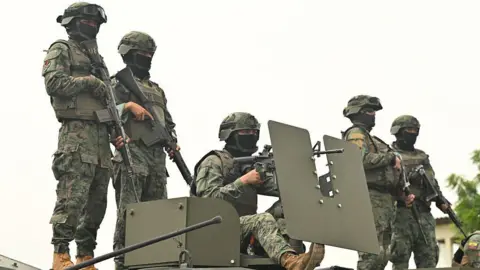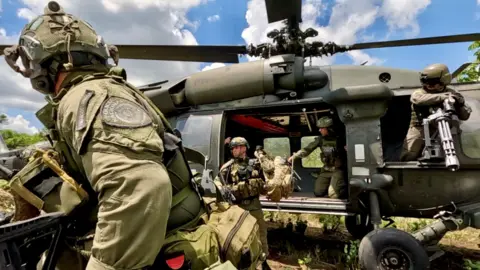
The Black Hawk helicopter was ready for take-off, slicing through the humid air of the Colombian Amazon. Orla Guerin, a senior international correspondent for the BBC, joined the Jungle Commandos—a police special operations unit originally trained by Britain's SAS. These heavily armed commandos embarked on a familiar mission: to tackle the ever-present threat from drug gangs in Colombia, an area notorious for its cocaine production.
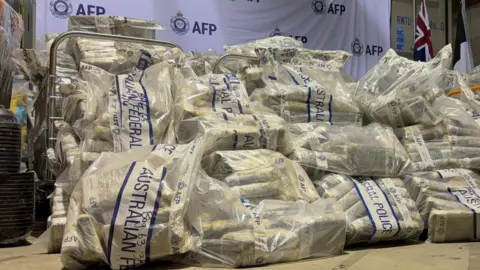
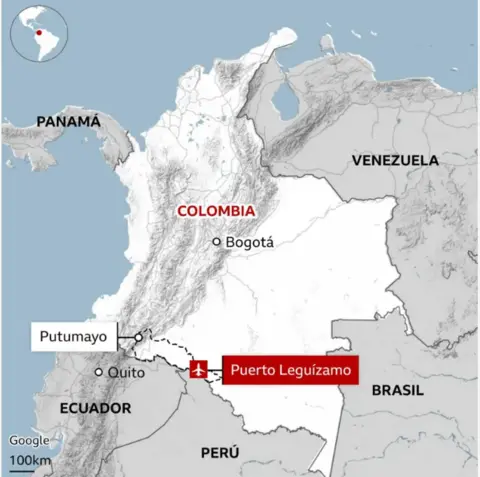
Colombia currently provides about 70% of the world's cocaine supply, with operations taking place in regions like Putumayo, close to the Ecuador border. A UN report indicates that coca crop cultivation has surged, covering nearly double the area of Greater London and four times that of New York City.
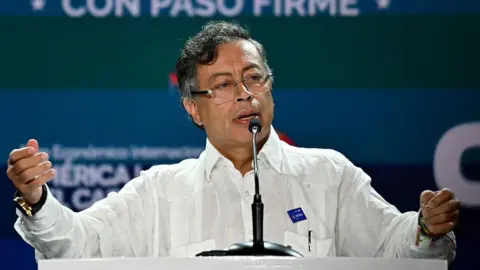
With frustrations mounting, the Colombian government, under left-wing President Gustavo Petro, faces international scrutiny. Former President Trump has criticized Petro for insufficient action against the cocaine trade, labeling him as incompetent. In response, Petro defends his administration, citing record drug seizures but acknowledges the unprecedented levels of coca production.
The BBC footage reveals not only the military operations targeting coca cultivators in dense jungles but also the human stories behind coca farming. Reports from local farmers like 'Javier,' who claims coca cultivation is his only means of supporting his family, illustrate the bleak economic realities faced in rural Colombia. Farmers like him struggle between moral dilemmas and the dire need for survival amid a lack of economic opportunities.
As the commandos land in areas where cocaine labs operate, tensions rise. These missions not only focus on destroying drug labs but aim to disrupt the profitability of criminal organizations, even as they recognize that dismantled labs can quickly be replaced. Major Cristhian Cedano Díaz candidly notes that while these operations are crucial, the fight against the sophisticated and evolving drug trade may take generations to resolve, especially as local gangs adapt by utilizing new technologies.
In contrast, Colombia's Defense Minister attributes part of the drug problem to the increasing demand for cocaine in Europe. He highlights the complexities intertwined within Colombia's socio-political fabric, voicing the need for not merely military solutions but economic support essential for altering the lives of coca farmers.
As the commandos continue their operations, the chronic fight against drug production amidst international expectations signifies both a challenge and a hope for future generations in Colombia, echoing the sentiments of both Major Cedano Díaz and local farmers caught in the crossfire of a war that seems never-ending.