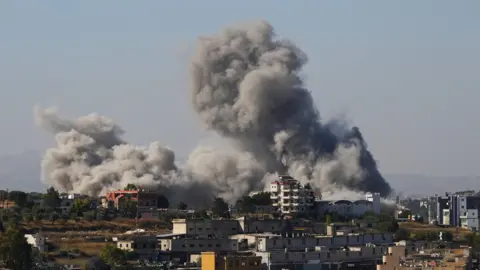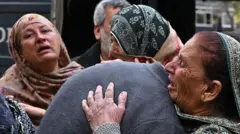
At least 31 people have been killed and 169 injured in an explosion at a mosque during Friday prayers in Pakistan's capital, Islamabad, officials say.
According to police, a suicide bomber detonated a device after approaching the gates of the Shia mosque in the Tarlai area of the city. Eyewitnesses have told the BBC the blast was preceded by the sound of gunfire.
An emergency was declared as hospitals began to receive the wounded, with an appeal sent out for blood donations.
Condemning the incident, Pakistan's Prime Minister Shehbaz Sharif expressed deep grief as he called for a thorough investigation and the immediate identification of those behind the attack.
In separate statements, Pakistan's President Asif Ali Zardari said targeting innocent civilians is a crime against humanity, while Defence Minister Khawaja Asif suggested India and Afghanistan were behind the attack. Asif claimed it had been proven that the attacker had travelled to and from Afghanistan, accusing India and Afghanistan of collusion.
The Taliban government of Afghanistan described these comments as regrettable and hastily attributed without credible evidence. Afghan foreign ministry spokesman Abdul Qahar Balkhi condemned the attack and extended condolences, stating that such actions contradict Islamic and humanitarian values.
The Indian foreign ministry also condemned the attack, sending condolences for the loss of life and dismissing accusations of involvement as baseless.
Talal Chaudhry, Pakistan's minister of state for interior, stated that the suspect was not an Afghan citizen according to local media.
United Nations Secretary-General Antonio Guterres condemned the attack strongly, calling for those responsible to be identified and brought to justice.
Eyewitness Zaheer Abbas recalled hearing gunfire just before the explosion inside the Khadijatul Kubra Mosque. Following the blast, he described the chaos and injuries that resulted, highlighting that emergency services were overwhelmed by the situation.
The blast comes in the wake of heightened violence in Pakistan, particularly in the Balochistan province, where coordinated attacks killed 58 civilians just a week earlier. The Pakistan Institute for Conflict and Security Studies reported a surge in violence last year, underscoring escalating security concerns.