In brief
In a recent interview with the BBC, US Treasury Secretary Scott Bessent highlighted the importance of enduring temporary economic hardships for the sake of enhanced global security against Iran's nuclear ambitions. As discussions intensify around the potential economic impact of the ongoing US-Israel conflict with Iran, Bessent emphasized the prioritization of long-term safety over immediate financial concerns. He addressed the possible risks posed by Iran's missile capabilities and nuclear intentions, framing military action as a vital step towards diminishing these threats. The International Monetary Fund's warnings on a possible recession serve as a backdrop to Bessent's commentary, illustrating the high stakes involved in navigating this geopolitical crisis.
US Treasury Secretary Scott Bessent has told the BBC a small bit of economic pain is worthwhile for long-term international security.
As the International Monetary Fund (IMF) warned the US-Israel war with Iran could plunge the global economy into recession, Bessent said the conflict was to eliminate the threat of Iranian nuclear strikes on Western capitals.
I wonder what the hit to global GDP would be if a nuclear weapon hit London... I am saying that I am less concerned about short-term forecasts, for long-term security, he said.
At the start of the war, Iran had uranium enriched to 60%, according to senior US officials. It does not have nuclear weapons.
The UK government has said there is no assessment that Iran is trying to target Europe with missiles.
Bessent told the BBC he was less concerned about the economic hit than the risk Iran posed to global security.
The biggest risk you can take is one you don't know you were taking. Now we know for a fact that, as the Iranians shot at Diego Garcia, they do have mid-range intercontinental ballistic missiles that could reach London, and we know that they want a nuclear programme, he said.
He added that US and Israeli strikes had removed the tail risk of Iranian nuclear strikes against Western countries.
As the BBC has previously reported, the threat of Iranian ballistic missiles to London is remote.
A UK government spokesperson said: There is no assessment Iran is trying to target Europe with missiles. But we have the military capability we need to keep Britain safe from any kind of attacks, whether it's on our soil or from abroad. We are ready to defend the country, whatever the threat.
In its World Economic Outlook report, the IMF said in a worst-case scenario - where oil, gas and food prices spike and remain high this year and next - global growth could fall below 2% in 2026.
This would mean a close call for a global recession which has happened only four times since 1980, it said, most recently during the Covid pandemic.
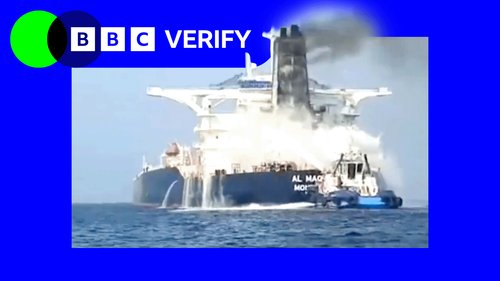
Energy prices have soared since the war began more than six weeks ago after the key Strait of Hormuz shipping route effectively closed and peace talks between the US and Iran failed.
The IMF said: Once again, the global economy is threatened with being thrown off course - this time by the outbreak of war in the Middle East at the end of February 2026.
It said the most severe conditions that could lead to a worldwide slowdown would include oil prices reaching an average $110 per barrel this year and hitting $125 in 2027.
Based on these assumptions, the IMF said inflation could reach as much as 6% next year. This could force central banks to increase interest rates to slow the pace of price rises.
IMF chief economist Pierre-Olivier Gourinchas told the BBC a prolonged conflict would lead to spiraling inflation, push up unemployment and lead to food insecurity in some countries.
He warned that even if the conflict ended today, the impact on oil supply would be as big as the fallout from the 1970s oil crisis, when Arab oil producers placed an embargo on the US and other countries which backed Israel during the Yom Kippur war.
But Gourinchas said the world was now less dependent on oil and fossil fuels, so the impact on consumers would be less severe.
Oil has risen close to $120 during the Iran conflict but has since fallen back, and on Tuesday, a barrel of crude cost $95.
Most Middle East oil exporters are forecast for an upturn next year based on the assumption that energy production and transportation are normalized over the next few months.